Posted on

Linux hacking guide for beginners

Hello, aspiring ethical hackers. In this blogpost, you will learn about Linux hacking. It comes under gaining access, third of the 5 phases of ethical hacking.

What is Linux hacking?

Although Linux hacking can be generalized as any type of hacking attempt made on Linux systems, gaining initial access to the Linux system can be termed as Linux Hacking.

Why is it important?

Linux hacking is one of the most important topics in ethical hacking. Why? According to the Statcounter global stats, as of March 2024 operating system market share, the topmost operating systems being used around the world are Linux or its variants. The same report also states that usage of Linux as desktop increased to 4.05% this year. Also note that majority of the servers around the world are Linux servers. So, learning Linux hacking can provide lot of knowledge. But what are the various methods used for hacking Linux systems.

Linux hacking techniques

There are multiple ways by which hackers can gain initial access on Linux systems. They are,

  1. Vulnerabilities in the operating system or kernel
  2. Application vulnerabilities.
  3. Payloads & malicious software.
  4. Password attacks.
  5. Misconfigured services.
  6. Social- engineering

1. Vulnerabilities in the operating system or kernel:

An operating system or kernel is the core of any Linux system. Organizations around the world use various versions of Linux operating system for different purposes. So, any vulnerability exposed in the operating system can be exploited by hackers to gain initial access.

For example, in 2014, a vulnerability named Heartbleed was detected in the OpenSSL package that comes inbuilt with Linux kernel. It was used to exploit HTTPS enabled websites of Yahoo, Google, Dropbox, Facebook and other thousands of websites.

2. Application vulnerabilities:

A lot of applications or programs are installed on Linux for performing various functions. Any vulnerabilities in these installed programs can be exploited successfully to hack the Linux system. For example, hackers exploited Apache ActiveMQ software to deploy Kinsing malware on the infected systems in November 2023, Apache ActiveMQ is used as a communication bridge between multiple components that can be hosted on separate servers.

3. Malicious payloads:

Hackers just don’t use vulnerabilities to gain access. They also use malicious payloads like malware and virus to hack Linux systems. Since 2023, malware especially ransomware designed for Linux systems in or the rise. This malware is usually delivered by exploiting vulnerabilities, phishing attack or drive-by downloads. Examples of some payload generators are msfvenom, Veil, MSFPC, Cypher etc.

4. Password attacks:

As already mentioned, most of the servers in the world are built on Linux as it is open source. These include services like FTP, HTTP, SSH etc. If credentials of any of these services are cracked by hackers, it will provide a way to gain access to the underlying Linux server. Learn more about password cracking.

5. Misconfigured services:

Sometimes, services being used in the target Linux systems can be misconfigured either by mistake or by ignorance. Hackers can exploit these misconfigurations to hack the Linux system. For example, in March 2023, an advanced malware campaign exploited misconfigurations in Apache Hadoop, YARN, Docker, Confluence and Redis on Linux instances.

7. Social-engineering:

No matter how strong the firewall on the network is or how secure the Linux devices are in a network, if the employees of the organization are not well trained, they can eventually give hackers access into the network or Linux devices. Social-engineering is often very underrated as a factor that allows hackers to hack Linux systems. Learn more about social engineering.

Posted on

Windows hacking guide for beginners

Hello, aspiring ethical hackers. This article is a beginners guide for Windows hacking. It comes under gaining access, third of the 5 phases of ethical hacking.

What is Windows hacking?

Although Windows hacking can be generalized to any hacking performed on the Windows operating system, gaining initial access to the Windows systems is known as Windows hacking.

Why is it important?

According to StatCounter Global Stats, over 72.52% of people worldwide use Windows as their Desktop. That is the reason why Windows hacking is one of the most important topics of ethical hacking.

Windows hacking techniques

There are multiple ways by which hackers can gain initial access on Windows systems. They are,

  1. Vulnerabilities in the operating system or kernel
  2. Application vulnerabilities.
  3. Payloads & malicious software.
  4. Password attacks.
  5. Misconfigured services.
  6. Social- engineering

1. Vulnerabilities in the operating system or kernel:

An operating system or kernel is the core of any Windows system. Enterprises around the world use Windows operating system for various purposes. As already mentioned, according to StatCounter Global Stats, over 72.52% of people worldwide use Windows as their Desktop. So, any vulnerability exposed in the operating system can be exploited by hackers to gain initial access.

For example, in 2008, ms08-067 vulnerability was exploited by Conficker worm to infect millions of devices around the world. Similarly, another vulnerability in Windows software, Eternal Blue (ms17-010) was exploited by NSA for intelligence gathering and counter terrorism missions. When this vulnerability got leaked, it was exploited by the WannaCry ransomware attack that infected 2,30,000 Windows PCs across 150 countries.

2. Application vulnerabilities:

A lot of applications or programs are installed in Windows operating system to perform various functions. Any vulnerabilities in these installed programs can be exploited successfully to hack the Windows system. For example, macros feature in Microsoft office has been exploited for a long time by hacker groups around the world to gain initial access until this was banned officially by Microsoft. Macros is a feature in Microsoft office to automate procedures.

In 2022, Chinese hacker group Cicada, exploited VLC Media Player, a popular and open source multimedia player to hack Windows systems and installed malware for espionage purpose. They did this by embedding a malicious file alongside the VLC Media Player’s export functions.

3. Malicious payloads:

Hackers just don’t use vulnerabilities to gain access. They also use malicious payloads like malware and virus to hack Windows systems. These payloads can be spread by using dive-by downloads or phishing. For example, Zeus trojan that specializes stealing banking information is spread through same techniques mentioned above. Examples of some payload generators are msfvenom, Veil, MSFPC, Cypher etc.

4. Password attacks:

Some Enterprise Windows systems are enabled with remote access so that employees can connect to them remotely for the purpose of their work. The protocols enabling remote access like SSH, FTP, Telnet and RDP etc. Cracking the credentials of these services give hackers a way to gain access to the servers and subsequently to the Windows system. Learn more about password cracking.

As recently as November 2023, a Russian Hacker group (Midnight Blizzard) used password spraying attack, a type of password attack to compromise some corporate accounts of Microsoft users.

5. Misconfigured services:

Sometimes, services being used in the target Windows network can be misconfigured either by mistake or on purpose. Hackers can exploit these misconfigurations to hack the Windows system. In October 2022, Microsoft company exposed one endpoint to public internet without authentication. This led to data leak of 65,000 customers in 111 countries. The total size of the stolen data was 2.4 terabytes.

7. The human factor:

No matter how strong the firewall on the network is or how secure the Windows devices are in a network, if the employees of the organization are not well trained, they can eventually give hackers access into the network or Windows devices. Social-engineering is often very underrated as a factor that allows hackers to hack Windows systems. Learn more about social engineering.

Posted on

Gaining access in ethical hacking: Techniques

Hello, aspiring ethical hackers. This article is a beginner guide to gaining access. Gaining access is the third phase in ethical hacking after footprinting and scanning & enumeration. It should be noted that the earlier two phases will play a major role in gaining access. This blogpost will explain you about different ways in which hackers or pen testers gain access to a target system or network.

What is gaining access?

In our previous blogpost, you learnt what a shell is and types of shell in cybersecurity. When a hacker or pen tester gains a shell on the target system or network, it is called as gaining access. Gaining access is the first phase where a hacker or pen tester gains some control on the target system.

Methods of gaining access

There are multiple ways by which hackers can gain initial access. They are,

  1. Vulnerabilities in the operating system or firmware.
  2. Application vulnerabilities.
  3. Payloads & malicious software.
  4. Password’ cracking.
  5. Misconfigured services.
  6. Social- engineering.
  7. Wi Fi hacking

1. Vulnerabilities in the operating system or firmware:

An operating system is the core of any computing device. Enterprises around the world use different operating systems for different purposes. Some of the popular operating systems used by enterprises around the world are Windows, Linux, MacOS, Android, IOS, chrome OS, Red Hat Enterprise Linux, Solaris, Centos, Ubuntu, IRIX and FreeBSD etc. No matter what operating system it is, it is a software consisting of programs. So, any vulnerability exposed in the operating system can be exploited by hackers to gain initial access. For example, ms08-067 and EternalBlue.

2. Application vulnerabilities:

An operating system is by itself not useful. So, a lot of application or programs are installed over the operating system to perform certain functions. Any vulnerabilities in these installed programs can be exploited successfully gain initial access. For example, Macros or Excel Macros.

3. Malicious payloads:

Hackers just don’t use vulnerabilities to gain access. They also use malicious payloads like malware and virus to gain access. Learn more about payload generators.

4. Cracked passwords:

Sometimes enterprise systems are enabled with remote access so that employees can connect to them remotely for the purpose of their work. The protocols enabling remote access like SSH, FTP, Telnet and RDP etc. Cracking the credentials of these services give hackers a way to gain access to the servers and subsequently to the entire system or network. Learn more about password cracking.

5. Misconfigured services:

Sometimes, services being used by the target network can be misconfigured either by mistake or on purpose. Hackers can exploit these misconfigurations to gain initial access.

6. Hacking Wi-Fi network:

Wi Fi hacking is often sometimes ignored as a factor that can provide initial access to the hackers. Hacking WiFi (especially if the password is not complex) is very easy compared gaining access through the above explained methods. It also provides easy access to hack. Learn more about WiFi hacking.

7. The human factor:

No matter how strong the firewall on the network is or how secure the devices are in a network, if the employees of the organization are not well trained, they can eventually give hackers access into the network or devices. Social-engineering is often very underrated as a factor that allows hackers to gain access. Learn more about social engineering.

Posted on

Beginner’s Guide to Social Engineering: Types, Examples and Prevention

Imagine receiving an email that appears to come from your bank, a phone call from someone claiming to be your IT administrator or a message warning that your account will be suspended unless you act immediately. Each message may look convincing but the real danger could be the person attempting to influence your decisions.

This is the idea behind social engineering. Instead of relying only on technical vulnerabilities, attackers manipulate people into revealing information, approving requests or performing actions that compromise security.

Understanding social engineering is essential for anyone interested in cybersecurity. This beginner’s guide explains how social engineering works, its common types, real-world warning signs and practical ways to defend against it.

What Is Social Engineering?

Social engineering is the use of deception, manipulation or psychological influence to persuade someone to disclose sensitive information, grant access, transfer money or take an action that benefits an attacker.

Traditional cyberattacks may exploit weaknesses in software, networks or devices. Social engineering targets human decision-making.

For example, an attacker might impersonate a company’s technical support team and ask an employee to share a verification code. If the employee trusts the caller and provides the code, the attacker may gain access to an account.

Social engineering can occur through email, phone calls, text messages, social media, messaging applications or face-to-face interactions. It is important to remember that social engineering does not always involve sophisticated technology. Sometimes, a convincing story and a sense of urgency are enough to influence a person’s actions.

Why Does Social Engineering Work?

Social engineering often succeeds by exploiting normal human tendencies rather than a lack of intelligence or technical knowledge. Attackers may use several psychological techniques.

Urgency: A message claims that an account will be disabled or a payment must be made immediately, discouraging careful verification.

Authority: Someone pretends to be a manager, government official, bank representative or IT administrator.

Fear: A victim is told that their account has been compromised or that they will face consequences if they do not comply.

Curiosity: A message encourages someone to open an unexpected attachment or investigate a suspicious link.

Trust: An attacker impersonates a colleague, friend, service provider or familiar organization.

Helpfulness: Someone requests assistance with a task that appears routine but involves sensitive access or information.

These techniques can affect anyone, including experienced professionals. The best defense is to build habits that make verification a normal part of everyday decisions.

Common Types of Social Engineering Attacks

Social Engineering can be classified into three types. They are: Human based, Computer based and Mobile based.

Human based Social Engineering:

In human based social engineering, attackers interact with a human personally to perform the attack. There are many types of these attacks. Some of them are,

1. Dumpster diving:

Dumpster diving is a technique in which an attecker searches the dump or dustbin to gather any information about the organization.

2. Impersonation:

In this attack, attacker impersonates as another user to gather important information about any organization or performing hacking attacks. Any information obtained in dumpster diving can be useful in this stage. Obviously, an attacker will impersonate as a legitimate user of the organization or a person of authority or anyone else who has a chance to enter a company physically or virtually.

In June 2023, hacking group tracked as “Pink Drainer” impersonated journalists in phishing attacks to gain access to 1932 Discord and Twitter accounts. They stole approximately $29,97,707 worth of cryptocurrency.

3. Piggybacking:

Piggybacking is used to gain access to the premises of a company or organization. In piggybacking, a genuine employee of an organization allows access to the attacker because he/she thinks that the attacker has genuine reason to be on the organization’s premises. It usually happens when the hacker impersonates as anyone who is allowed into company’s premises. For example, delivery boy, technician etc.

4. Tailgating:

Tailgating is a physical social engineering technique in which an unauthorized person follows an authorized individual into a restricted area. The intruder may rely on politeness or the assumption that they belong there.

Organizations can reduce this risk through access badges, visitor procedures, security awareness training and a culture in which employees feel comfortable challenging unfamiliar access requests appropriately.

5. Eavesdropping:

Eaves dropping is secretly listening to the conversation of employees of the organization etc. This can happen anywhere but mostly happens at recreational spots.

6. Shoulder surfing:

Shoulder surfing is the technique in which an attacker spies on the legitimate users of the organization by staying behind them. Shoulder surfing is normally used to spy on legitimate user’s credentials but it can also be used to gather any valuable information.

7. Vishing:

Vishing or voice phishing, uses phone calls or voice messages to deceive victims. A caller might claim to represent a bank, technical support team or government agency.

The caller may request a password, a one-time verification code, remote access to a computer or an urgent payment. Never disclose authentication codes or passwords to an unsolicited caller. End the call and contact the organization through a trusted, independently obtained number.

In July 2020, hackers used vishing to trick Twitter employees into revealing account credentials of 130 Twitter account including that of Barack Obama, Joe Biden and Kanye West. The share value of Twitter plummeted by 7% after this incident.

8. Pretexting:

Pretexting involves creating a fabricated story or identity to persuade someone to share information or perform an action. For example, someone might pretend to be an employee conducting an internal audit and request confidential staff information.

Organizations should verify identities and ensure that requests follow approved procedures, especially when sensitive data or privileged access is involved.

In pretexting, attacker creates specific scenarios or events by which the user he/she is targeting reveals information he/she makes.

9. Quid Pro Quo:

In a quid pro quo attack, an attacker offers a benefit or service in exchange for information or access. For example, someone posing as technical support might offer to fix a computer problem in return for account credentials.

Legitimate support staff should follow established identity-verification and access procedures rather than asking users to disclose their passwords.

Computer based Social Engineering:

When a computer is used in an engineering attack, it is known as computer based social engineering attack. There are three most important types of computer based social engineering attacks. They are,

1. Phishing:

Phishing uses deceptive emails, messages or websites to trick people into revealing credentials, sharing personal information, making payments or downloading malicious files. Phishing is one of the most important attack techniques used in real-world. Learn about Phishing in detail.

A phishing email might imitate a delivery company and claim that a package cannot be delivered until the recipient confirms their details. Warning signs include unexpected requests, suspicious links, unusual sender addresses and pressure to act quickly. Analysing an email plays an important role in detecting phishing emails. Learn how to analyse emails.

There are multiple examples of attackers creating a fake phishing website to steal credentials, credit card information or other sensitive information. In August 2023, Supreme Court (the highest court of India) warned users about a fake website impersonating website of the Supreme Court trying to solicit personal details and confidential information from users. Learn how to simulate a phishing attack with Weeman HTTP server and GoPhish.

2. Spear Phishing:

Spear phishing is a targeted form of phishing directed at a particular person or organization. The message may include the recipient’s name, job title, employer or other relevant details to appear credible.

As the message can be personalized, it may be harder to recognize than a generic phishing attempt. Personalized information does not prove that a request is legitimate. Verify unusual requests independently.

In spear phishing, a hacker selects specific users as targets and sends them an email with malware attached to the email and luring them to download and execute the attached payloads or take some other action. In February 2022, Russian hacking group known as Gamaredon, targeted Ukrainian government agencies and NGO’s with a spear phishing email campaign with malware laden emails.

3.Baiting:

Baiting uses something tempting to encourage an unsafe action. A classic example is a USB drive labeled as containing interesting or important files. If someone connects an unknown device to a computer, it may expose the system to malicious activity.

Do not connect unknown storage devices to your personal or work computer. Follow your organization’s security procedures for handling unfamiliar devices.

Mobile based SE

If an engineering attack uses mobile it is known as mobile based social engineering. SMishing is a type of mobile based social engineering attack.

1. SMishing:

Smishing is phishing delivered through SMS or text messages. Common examples include fake delivery notifications, banking alerts, account warnings and fraudulent payment requests.

Avoid following unexpected links in messages. Open the official application or type the organization’s known website address into your browser instead.

Learn about Social Engineering Toolkit (SET), an open-source framework to perform a variety of social engineering attacks.

Real-World Examples of Social Engineering

Consider these common scenarios.

The fake account alert: You receive an email claiming that suspicious activity has been detected on your account. A link takes you to a fraudulent login page designed to capture your credentials.

The urgent executive request: An employee receives a message apparently from a senior manager requesting an immediate, confidential payment. The employee transfers money without independently confirming the request.

The technical support call: A caller claims that a computer has a serious security problem and asks the user to install remote-access software. The user unknowingly grants control of the device.

The delivery message: A text message claims that a parcel is being held and asks the recipient to submit personal or payment information through an unfamiliar website.

In each example, the attacker attempts to influence a decision before the victim has time to verify the request.

How to Recognize Social Engineering

No single warning sign proves that a message is malicious. However, several indicators should prompt closer inspection:

  • Unexpected requests for passwords, verification codes, financial details or confidential files.
  • Pressure to act immediately or keep a request secret.
  • Sender addresses, phone numbers or website domains that do not match the claimed organization.
  • Unexpected attachments or links.
  • Requests to bypass normal approval or identity-verification procedures.
  • Offers that seem unusually generous or too good to be true.
  • Requests to install software or grant remote access without a verified support process.

Be particularly careful when a request changes established procedures. Even a message from a familiar account can be fraudulent if that account has been compromised.

How to Prevent Social Engineering Attacks

Social engineering cannot be eliminated entirely but individuals and organizations can significantly reduce risk.

Verify identities independently:

Contact the person or organization using a trusted phone number, official application or established communication channel. Do not rely solely on the contact details supplied in a suspicious message.

Use multifactor authentication:

MFA adds protection beyond passwords. Phishing-resistant methods, such as security keys or passkeys can provide stronger protection against credential theft.

Use a password manager:

Password managers help generate and store unique passwords. Some also help identify when a login page does not match the expected website.

Think before clicking:

Avoid opening unexpected attachments, following unfamiliar links or downloading software at the request of an unsolicited contact.

Confirm financial and sensitive requests:

Verify payment changes, unusual transfers, confidential data requests and privilege changes through an independent channel and approved procedures.

Keep systems updated:

Apply security updates and use appropriate endpoint protection. These controls cannot prevent every manipulation attempt but they can reduce the impact of some successful attacks.

Report suspicious activity:

Notify the appropriate security team or service provider promptly. Early reporting may help prevent additional victims and support a faster response.

Practice security awareness:

Regular training and realistic, authorized exercises help people recognize suspicious behavior without creating a culture of blame.

Learn Social Engineering Safely

For aspiring cybersecurity professionals, social engineering is an important subject in security awareness, incident response, penetration testing and risk management. You can study it safely by analyzing publicly documented phishing examples, examining email headers, learning how web addresses work and practicing detection with simulated messages in an authorized training environment.

If you participate in a social engineering assessment, obtain explicit authorization and follow a clearly defined scope. Never impersonate real organizations to collect credentials, target uninvolved people or test systems without permission. The objective of ethical security work is to identify weaknesses, improve awareness and recommend effective defenses—not to exploit people for personal gain.

Conclusion

Social engineering demonstrates that cybersecurity is not only about software, networks and devices. It is also about how people interpret information and make decisions.

Phishing, vishing, smishing, pretexting, baiting and tailgating use different methods but they share a common goal: persuading someone to take an action that weakens security.

Develop a habit of pausing, verifying unusual requests, protecting authentication details and reporting suspicious activity. For cybersecurity beginners, learning to recognize social engineering is an important foundation for understanding how real-world attacks happen and how they can be prevented.

Remember: when a request creates urgency, demands secrecy or asks you to bypass normal security procedures, stop and verify before acting.

Posted on

Macros Explained: What, How and Why

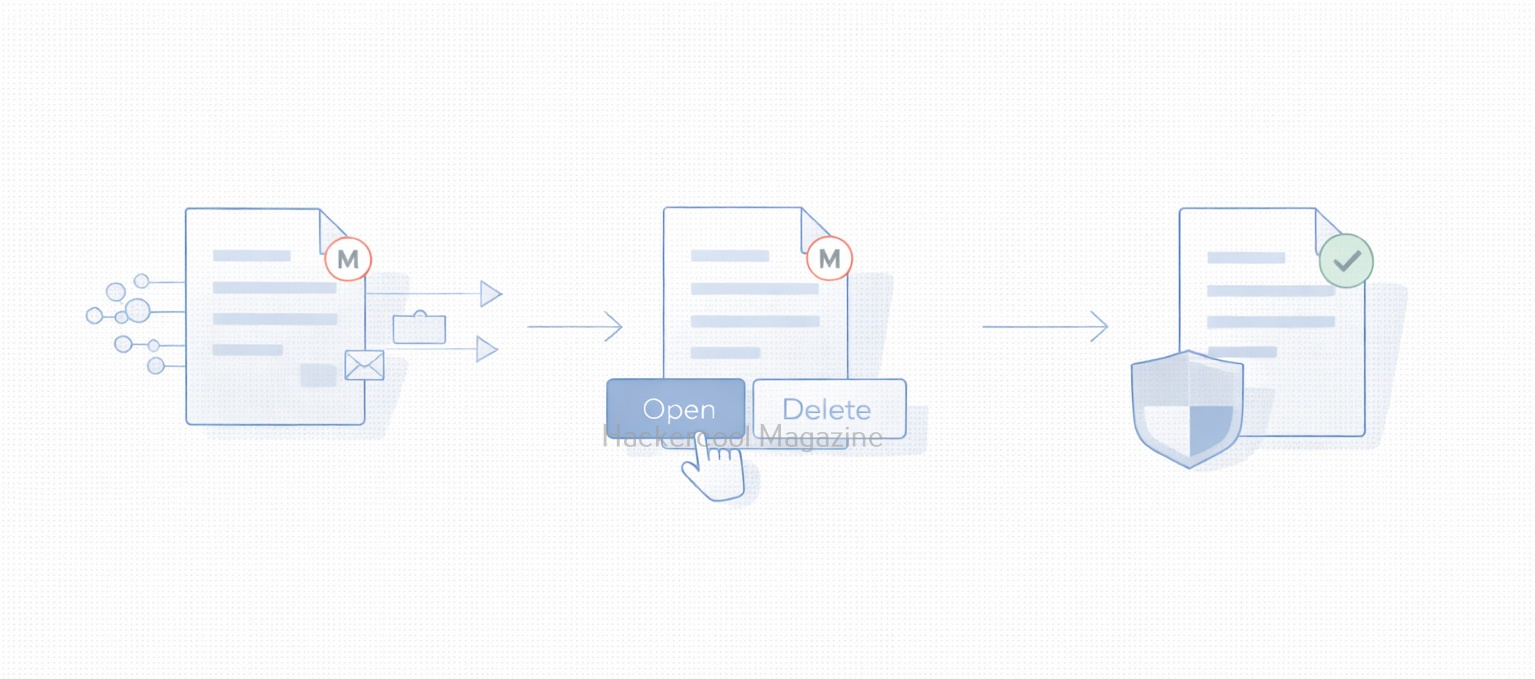
Hello aspiring ethical hackers. In this article, you will learn about Macros also popularly known as Macro Malware or Macro Virus. Macros are one of the most misunderstood features in modern computing. For some users, they are powerful productivity tools that automate repetitive tasks. For cybersecurity professionals, they represent one of the most abused entry points for malware delivery. Understanding macros is essential not just for attackers or defenders but for everyday users who open documents at work.

In this blog post, we’ll break down what macros are, how they work, where they’re used and why they play such an important role in cybersecurity awareness.

What Are Macros?

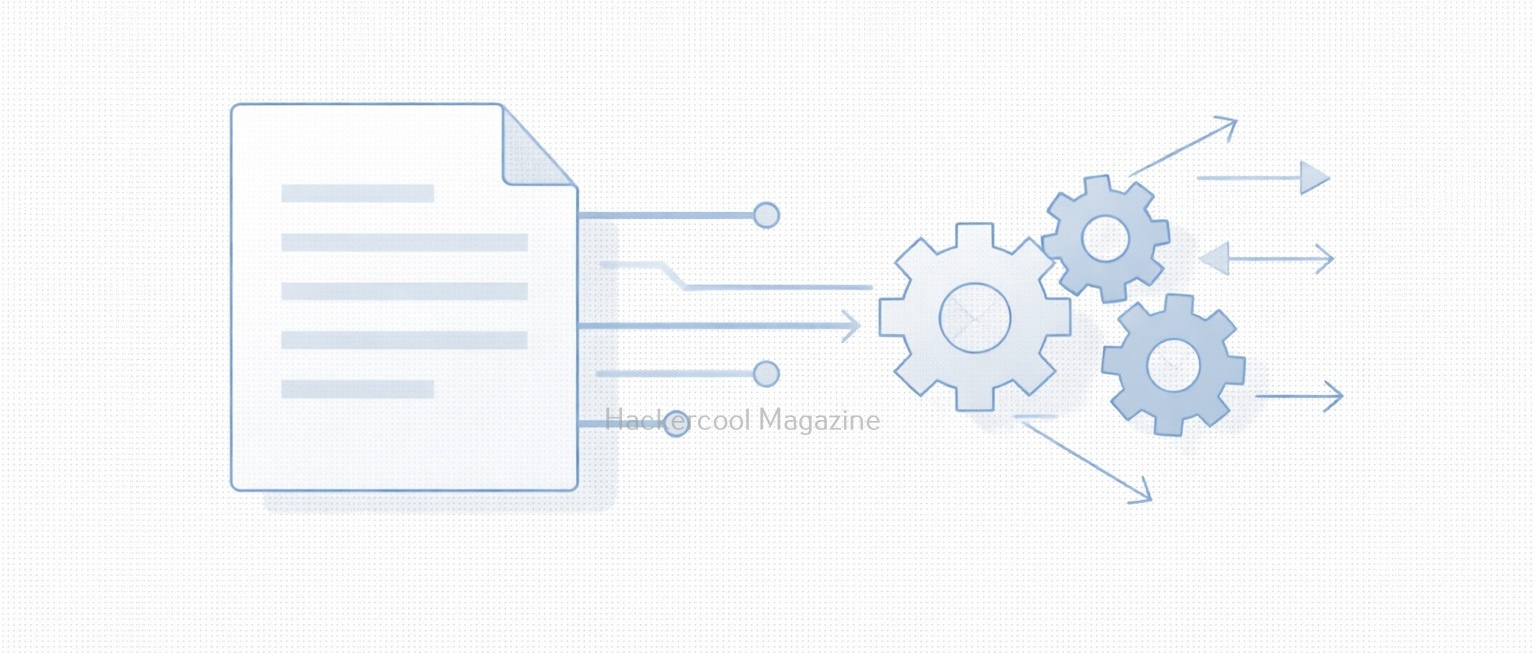
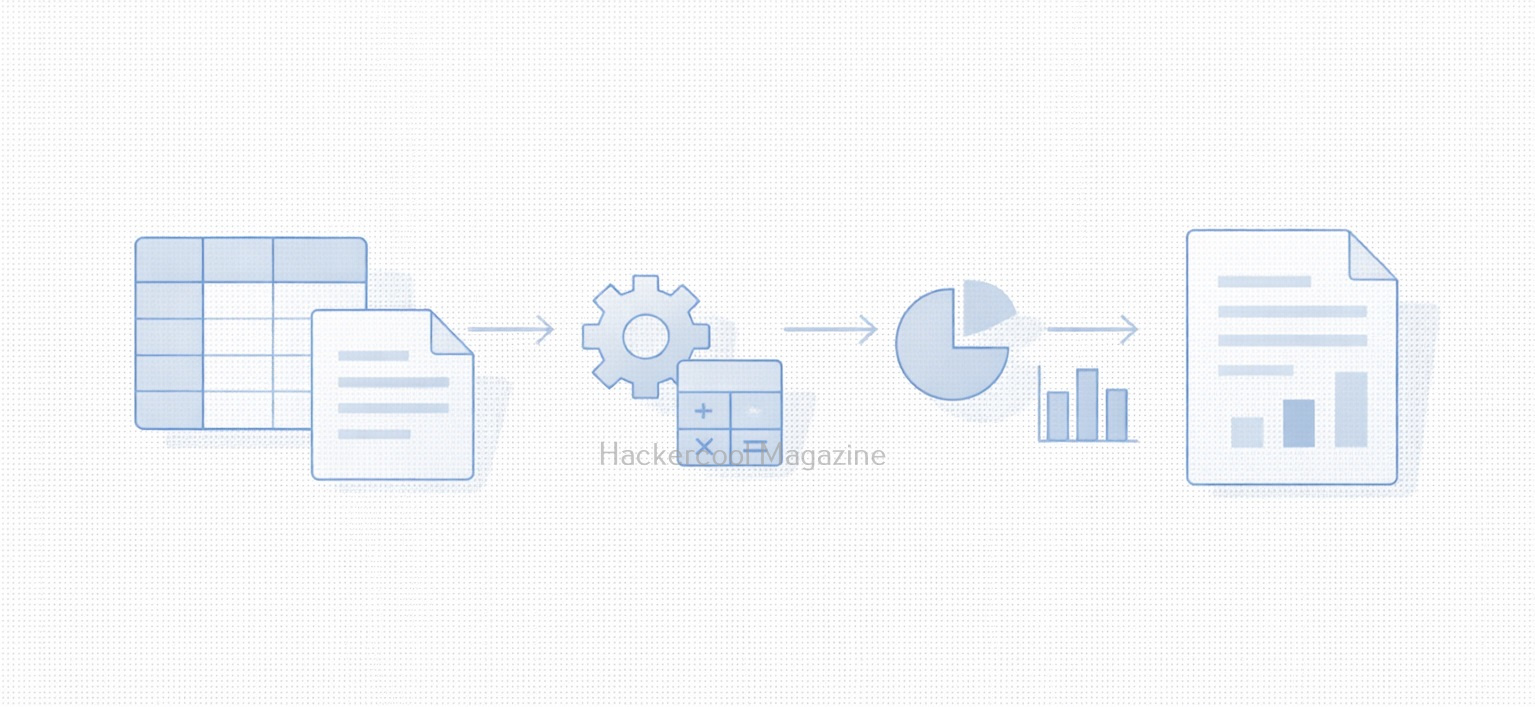
A macro is a small piece of code that automates tasks inside applications. It is most commonly used in office productivity software like spreadsheets, word processors and presentation tools. Instead of manually repeating actions such as:

  • Formatting tables
  • Copying data between sheets
  • Generating reports
  • Cleaning up text

A macro can perform these actions automatically with a single click. They are usually written in a scripting language built into the application allowing users to extend functionality without installing external software.

Why Macros Exist (The Legitimate Use case)?

Macros were designed to improve productivity. Common legitimate uses include:

  • Automating monthly reports
  • Processing large datasets
  • Enforcing document formatting standards
  • Performing calculations across multiple sheets
  • Reducing human error in repetitive tasks

In business environments, macros can save hours of manual work and are often deeply embedded into workflows that have existed for years.

How Macros Work (High-Level)?

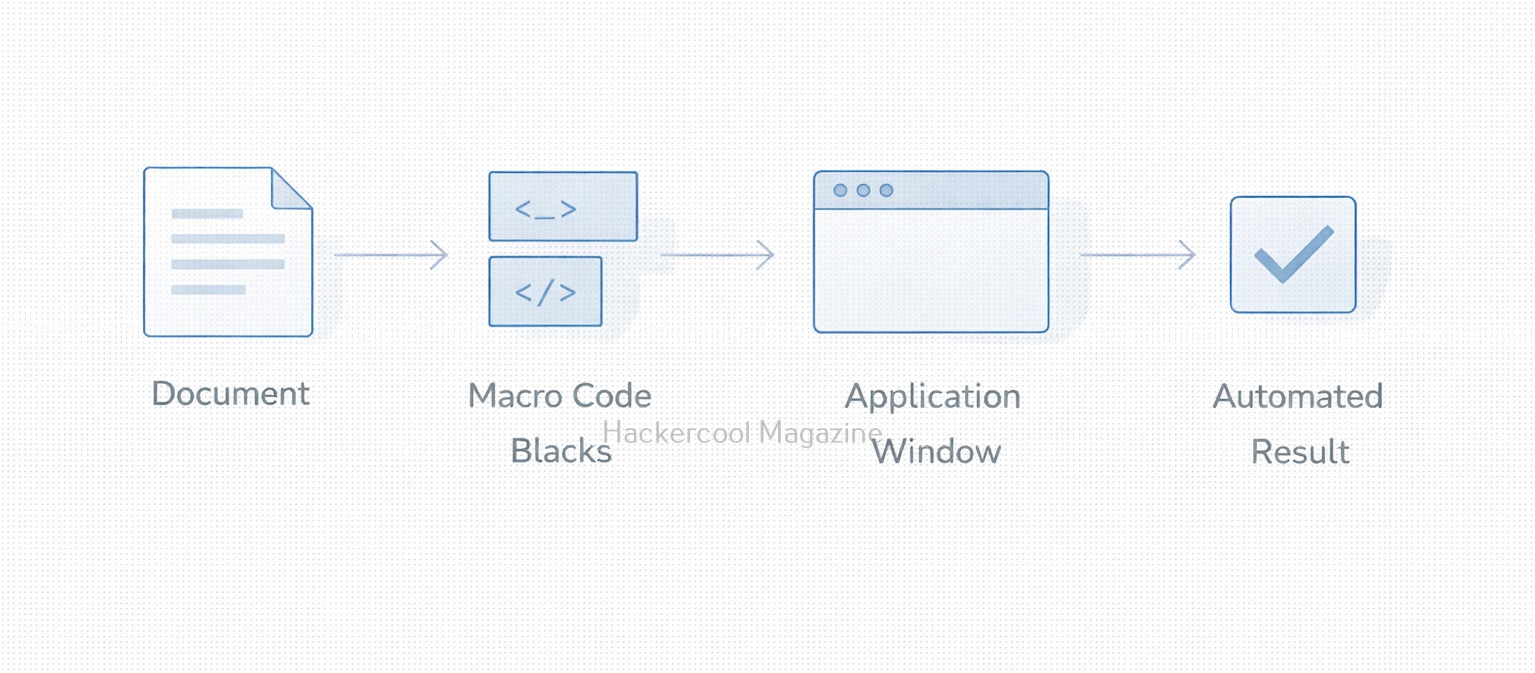
At a conceptual level, macros follow a simple process:

  1. A user opens a document
  2. The application checks whether macros are present
  3. If enabled, the macro code executes
  4. The macro interacts with the document, system or application features

This execution happens inside a trusted application which is why macros can be so powerful and dangerous.

Why Macros Are a Security Risk?

Macros became a popular attack vector because they exploit user trust rather than software vulnerabilities. Attackers take advantage of the fact that:

  • Documents are commonly shared via email
  • Office files feel “safe” to users
  • Macro execution relies on user consent
  • The code runs under the user’s privileges

A malicious macro can:

  • Download additional malware
  • Modify system settings
  • Steal credentials
  • Create persistence mechanisms
  • Act as the first stage of a larger attack

Many real-world breaches began with nothing more than a document attachment and a user clicking “Enable Content.”

Common Macro-Based Attack Scenarios

Some typical attack scenarios include:

Phishing Emails:

Attackers send invoices, resumes or shipping notices containing malicious macros disguised as legitimate documents.

Social Engineering:

The document claims macros must be enabled to “view content correctly” or “unlock protected data.”

Legacy Environments:

Older systems or internal tools still rely on macros, making blanket disabling difficult.

Why Macros Still Matter Today?

You might assume macros are outdated but they still remain relevant today because:

  • Many enterprises still rely on them
  • They require minimal technical skill to abuse
  • They bypass some perimeter defenses
  • They blend in with normal business traffic
  • They exploit human behavior, not software bugs

For red teams, macros demonstrate how effective initial access via user interaction can be. For blue teams, they represent a reminder that prevention is as much about people as technology.

Practical Walkthrough

Let’s see how to create a malicious macro. For this we will be using a tool that can be downloaded from here and will be performing this practical on Kali system. We can clone this tool as shown below.

Once cloning is complete, navigate into the cloned directory.

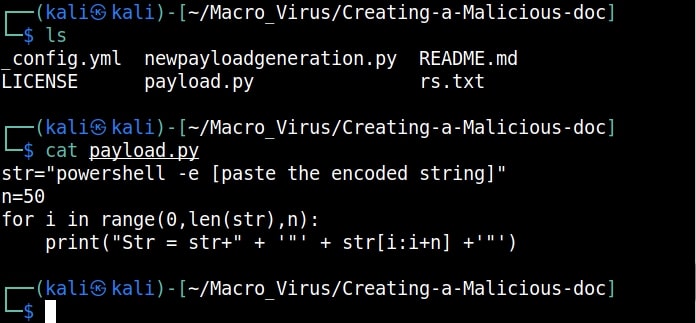
Inside that directory, there will be two python scripts: “newpayloadgeneration.py” and ‘payload.py’. Run the script ‘newpayloadgeneration.py’ by specifying the attacker IP address and port as options as shown below.

python3 newpayloadgeneration.py <Attacker Ip> <Listening Port>

This script generates a Powershell script for reverse shell. Obviously, the IP address and port should be of that system on which the listener is running to receive the reverse shell.

Copy the generated encoded string. Open the file ‘payload.py’ and paste the encoded string in the highlighted place.

Once pasted, save the file ‘payload.py’ to preserve the changes. Now, execute the ‘payload.py’ script.

The code for our malicious macro is ready. Now let’s create a Macro document. For this tutorial, we will be using MS Office 2007 to create it. Open a new Word document, go to “View” tab and click on Macros (as highlighted below).

malicious macro

Click on “view macros”.

In the new window that opens, click on “create” and give any name you prefer to that macro (We named it test, obviously).

Now, we create the code for macro. It starts with “Sub AutoOpen(). “Sub” stands for Subroutine in macro. It is a small program within the Visual Basic editor. Setting AutoOpen() executes the macro automatically whenever the document is opened. In the subroutine test(), we paste the malicious code we created earlier as shown below.

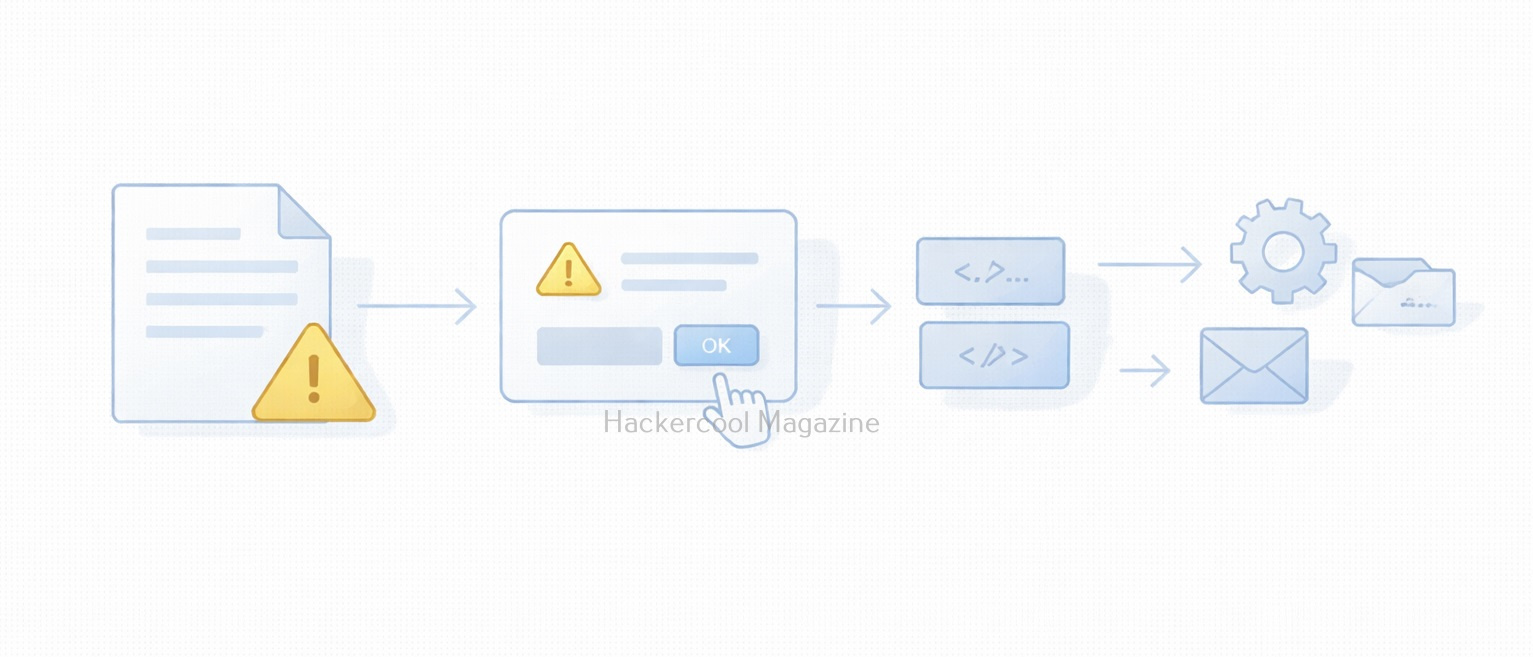
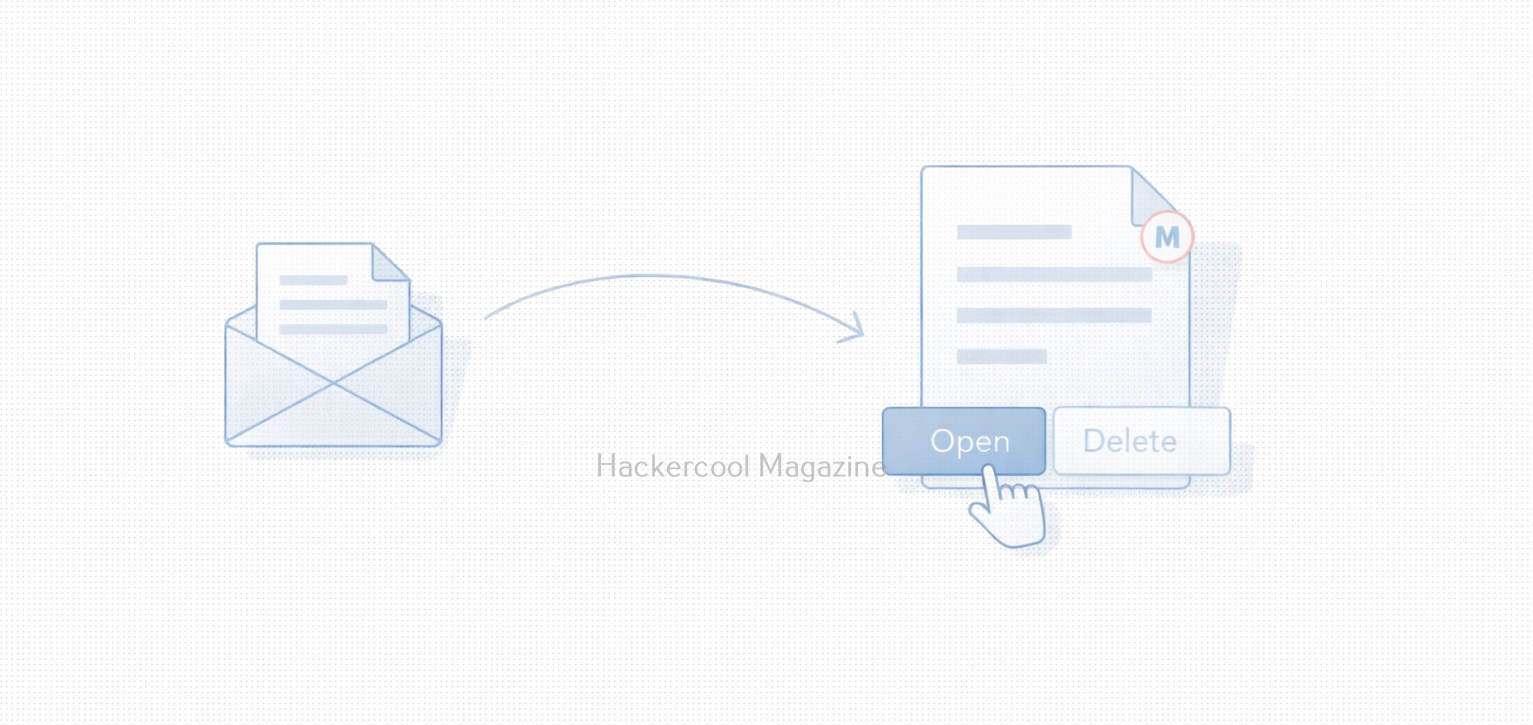
Then we save this file. This file is sent to the target users. In Real World hacking attacks, since this is the lure document, Social Engineering is used to convince users to open the document and enable macros.

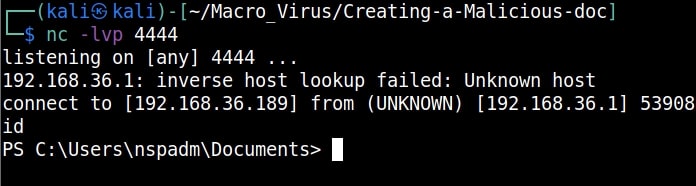
Let’s see if our macro is working or not. We start the Netcat listener on the attacker machine. When the target user opens this file, we get a security warning saying that macros have been disabled. This is a security feature by Microsoft to protect users from malicious macros. Let’s enable macros. Click on “Options” and enable macros as shown below.

As soon as we do this, a PowerShell window opens (remember that we created a PowerShell reverse shell)

and we get a incoming reverse shell on our listener as shown below.

This is how malicious macros work to give attackers initial access.

Best Practices for Macro Security

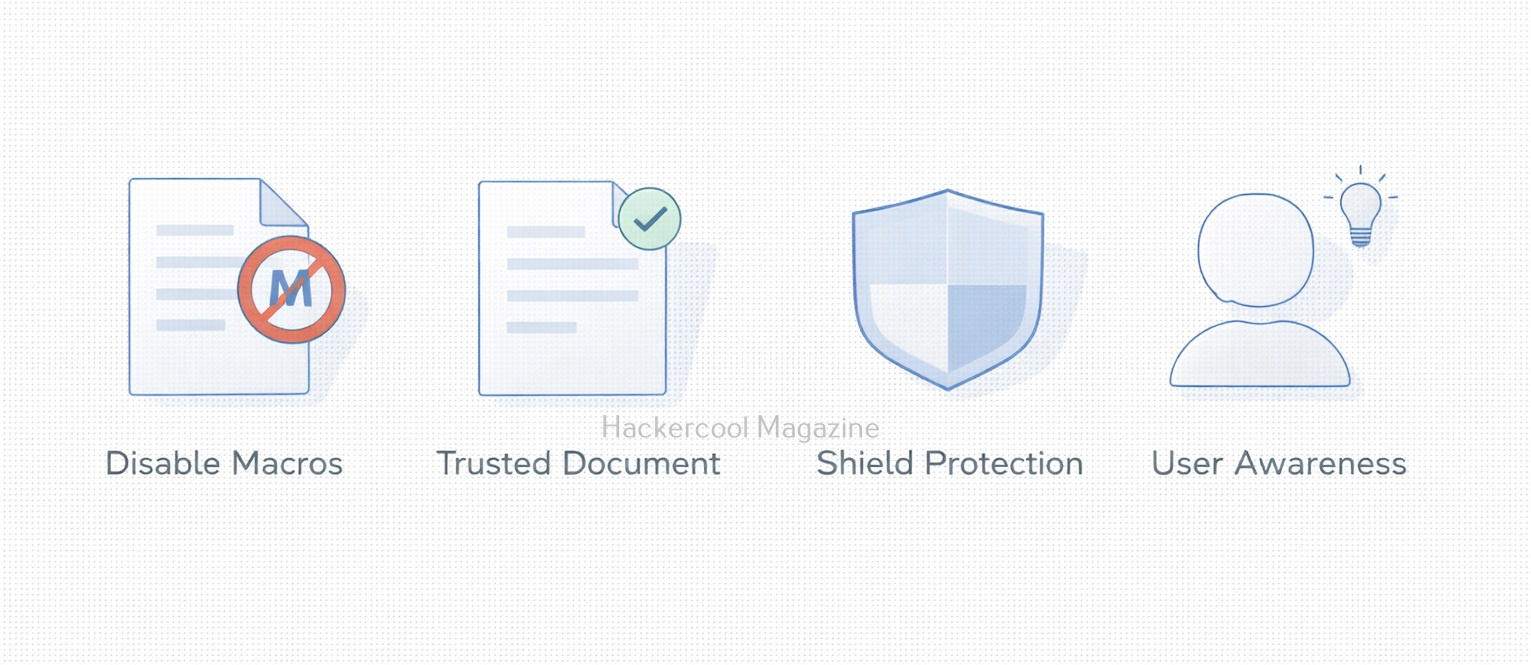
Organizations and individuals can reduce risk due to macros by:

  • Disabling macros by default
  • Allowing macros only from trusted sources
  • Blocking macros in files from the internet
  • Using protected view for attachments
  • Training users to recognize social engineering
  • Monitoring macro execution behavior

Security controls help but user awareness is the strongest defense.

What Macros Teach Us About Cybersecurity?

Macros highlight an important lesson:

The most dangerous attacks don’t always exploit systems. They exploit trust.

They show how:

  • Legitimate features can be weaponized
  • Convenience can conflict with security
  • Human decisions shape attack success
  • Old technology can remain dangerous

Understanding macros is not about fear, it’s about informed usage.

Conclusion

Macros are neither good nor bad by design. They are powerful tools that reflect how flexible modern software has become. But that same flexibility makes them attractive to attackers. For beginners in cybersecurity, macros are a perfect example of why context matters. For everyday users, they are a reminder to pause before clicking “Enable.” Because sometimes, the smallest piece of code can open the biggest door.