Cybersecurity has become an important part of the modern digital world. Businesses depend on computer networks, cloud platforms, websites, applications and digital services to operate. Protecting these systems from cyberattacks requires people who understand technology, recognize security weaknesses, investigate suspicious activity and help organizations reduce risk.
For beginners, however, entering cybersecurity can feel confusing. There are many career options, unfamiliar technical terms, certifications and tools to learn. Should you start with ethical hacking? Do you need a computer science degree? Is programming compulsory? And which skills should you learn first?
The good news is that you do not need to master everything before getting started. A successful cybersecurity career can be built progressively through foundational knowledge, hands-on practice, focused learning and demonstrable skills.
This guide explains the cybersecurity career path for beginners, from learning the fundamentals to choosing a specialization and preparing for your first role.
NEW TO ETHICAL HACKING?
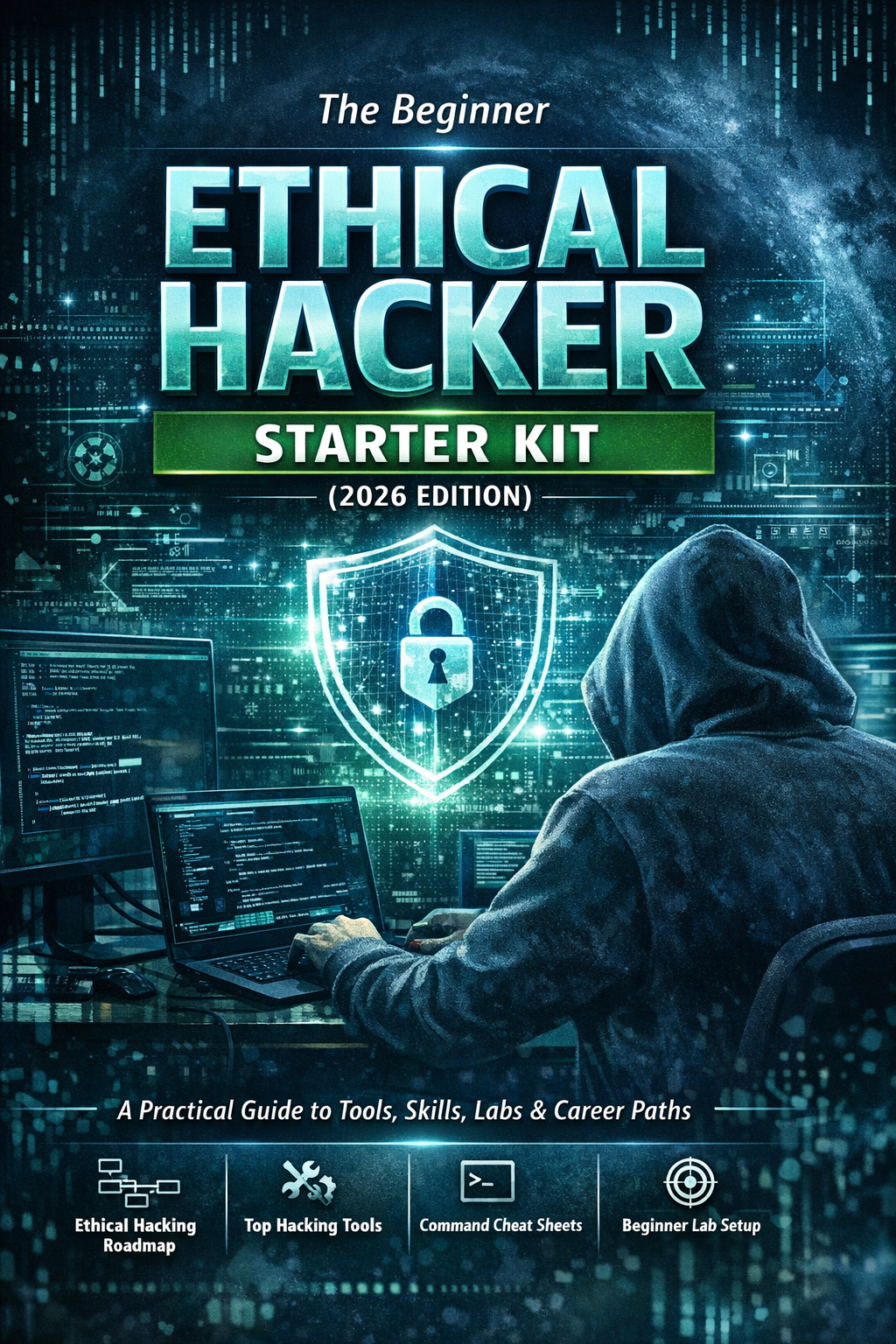
Start your ethical hacking journey with our FREE Beginner Ethical Hacker Starter Kit (2026 Edition).
Get beginner-friendly guidance to understand the fundamentals of ethical hacking and take your first steps into cybersecurity.

Understand What Cybersecurity Professionals Do
Cybersecurity is a broad field focused on protecting systems, networks, applications, identities and information from unauthorized access, disruption and misuse. Different professionals approach this goal in different ways.
For example, a penetration tester assesses systems for security weaknesses with authorization. A security operations center (SOC) analyst investigates suspicious activity. A security engineer implements protective controls, while a digital forensics investigator examines evidence following a security incident.
Before choosing a path, understand the major career options.

Common cybersecurity career paths:
Security Operations Center (SOC) Analyst: Monitors security alerts, investigates suspicious events, analyzes logs and helps identify potential incidents.
Penetration Tester: Tests authorized systems, websites, APIs and networks to identify exploitable vulnerabilities and documents the findings.
Security Engineer: Designs, deploys and maintains security technologies such as endpoint protection, firewalls, identity controls and monitoring systems.
Incident Responder: Investigates security incidents, determines their scope, coordinates containment and supports recovery.
Digital Forensics Analyst: Examines computers, storage devices, logs and other digital evidence to understand what happened during an incident.
Cloud Security Engineer: Helps protect cloud infrastructure, identities, workloads, storage and services.
Application Security Analyst: Helps developers identify and fix software vulnerabilities through secure design, code review and security testing.
You do not need to select your permanent specialization on day one. Start by developing common foundations, then explore the areas that interest you most.
Build Your Technical Foundation
One of the most common mistakes beginners make is jumping directly into advanced hacking tools without understanding the systems those tools examine. Cybersecurity becomes much easier when you understand how computers, networks and applications work.

Learn networking fundamentals:
Networking is essential for almost every cybersecurity role. You should understand:
- IP addresses, subnets and ports.
- TCP and UDP.
- DNS and DHCP.
- HTTP and HTTPS.
- Routers, switches and firewalls.
- Common network services.
- Basic packet analysis.
For example, when investigating a suspicious connection, a security analyst may need to understand the destination IP address, the port involved, the protocol used and whether the communication is expected.
Start with basic networking concepts before progressing to traffic analysis and network security.

Learn Linux and Windows:
Linux is widely used in servers, cloud environments, security laboratories and penetration-testing workflows. Windows is equally important because many organizations rely on Windows endpoints, servers and enterprise identity systems.
Learn how to navigate the command line, manage files, inspect running processes, understand permissions, manage services and examine system logs. For Linux, practice with a distribution such as Ubuntu. For Windows, learn basic PowerShell, Windows administration, Event Viewer, users and groups and file permissions.
You do not need to become a system administrator immediately. Your initial goal is to understand how these operating systems function and how their security settings affect access.
Understand Web Technologies:
Web security is a valuable area to explore because organizations depend on websites, APIs, authentication systems and online services. Learn how browsers communicate with servers, how HTTP requests and responses work, what cookies and sessions do and how authentication differs from authorization.
Once these concepts make sense, you will be better prepared to study common web vulnerabilities in authorized training environments.

Learn Core Cybersecurity Concepts
After developing basic technical knowledge, study the principles that underpin security work.
Begin with the confidentiality, integrity and availability model, commonly known as the CIA triad. These principles help explain why organizations protect information, maintain accurate records and keep services available.
You should also understand:
- Authentication and authorization.
- Least privilege and access control.
- Encryption and hashing.
- Vulnerabilities, threats and risk.
- Security patches and configuration management.
- Malware and phishing.
- Logging and security monitoring.
- Backups, incident response and recovery.
Learn how these concepts apply to real systems. For example, multifactor authentication can reduce the risk of account compromise, while centralized logging helps investigators understand suspicious activity. These fundamentals are useful whether you eventually work in ethical hacking, defensive security, cloud security or digital forensics.
Choose a Beginner-Friendly Entry Path
You can explore several cybersecurity areas before committing to one. Three practical starting paths are defensive security, offensive security and security engineering.

Path A: Defensive security
Defensive security focuses on identifying threats, monitoring systems and improving protection.
A beginner interested in this path can study system logs, network traffic, security alerts, endpoint monitoring and incident investigation. Build a small home lab and practice identifying unusual login activity or analyzing sample security logs.
Possible career progression:
SOC Analyst → Security Analyst → Incident Responder or Threat Hunter → Security Operations Specialist.
Actual progression depends on your experience, responsibilities and the opportunities available.

Path B: Ethical hacking and penetration testing
Ethical hacking involves testing systems with explicit authorization to identify security weaknesses and help organizations fix them. Begin with networking, Linux, Windows and web fundamentals. Then study reconnaissance, enumeration, vulnerability assessment, web application security and security reporting in controlled environments.
Practice using deliberately vulnerable applications and training platforms. Document what you tested, what you observed, why it matters and how the issue can be fixed.
Possible career progression:
IT or Security Trainee → Junior Security Tester → Penetration Tester → Senior Penetration Tester or a specialized security consultant.
Some people enter directly into junior testing roles, while others build experience through IT support, system administration, development or security operations first.
READY TO BUILD YOUR ETHICAL HACKING FOUNDATIONS?
Go beyond the basics. Develop the essential knowledge every aspiring ethical hacker needs.
Your learning package includes:
Networking Fundamentals
Linux Fundamentals
Windows Fundamentals
Web Fundamentals
Command Line Essentials
Virtual Labs
$1 INTRODUCTORY TRIAL
6 Foundation Resources + Full Magazine Access
Trial terms apply. Post-trial subscription billing is manual.

Path C: Security engineering
Security engineering suits people who enjoy building, configuring and maintaining technology. Focus on operating systems, networking, identity management, endpoint security, cloud fundamentals, automation and secure configurations.
Possible career progression:
IT Support or Systems Administrator → Security Engineer → Senior Security Engineer or Security Architect.
These paths overlap. Experience with logs helps penetration testers validate findings and ethical hacking knowledge can help security engineers understand how defenses fail.

Develop Hands-On Skills in a Safe Environment
Reading articles and watching tutorials can introduce concepts but practical exercises help you learn how to apply them. Build a small lab using virtual machines or cloud resources that you control. Keep vulnerable systems isolated and avoid exposing them to the public internet.
Useful learning resources include:
- TryHackMe: Guided cybersecurity learning paths and practical exercises.
- Hack The Box Academy: Structured technical modules and hands-on labs.
- PortSwigger Web Security Academy: Free web application security lessons and interactive labs.
- OWASP Juice Shop: An intentionally vulnerable application for learning web security.
- Wireshark: A tool for examining network traffic and understanding protocols.
Choose resources based on your current level rather than trying to complete everything at once. For each lab, record the objective, the environment, the steps you followed, what you learned and how a weakness could be prevented. Never test systems without permission, even if they appear vulnerable.

Learn the Tools That Match Your Career Goal
Cybersecurity tools support investigation and testing but they are not substitutes for understanding. For defensive security, explore Wireshark, Windows Event Viewer, Sysmon and a security information and event management (SIEM) platform.
For penetration testing, learn Nmap for authorized network discovery, Burp Suite for web application testing, and basic scripting to automate repetitive tasks. For security engineering, explore system configuration tools, identity and access management, endpoint protection and cloud security controls.
You do not need to learn every tool. Start with one tool, understand its purpose, practice in a lab and learn how to interpret its results. The most valuable skill is not simply knowing which button to click. It is understanding what the output means, whether it is reliable and what action should follow.

Learn Programming and Scripting Gradually
Programming is useful in cybersecurity but the amount required depends on the role. Python can help automate repetitive tasks, process log files, work with APIs and analyze data. Bash is useful for Linux administration, while PowerShell is valuable for Windows environments.
If you are interested in application security, understanding JavaScript and the fundamentals of web development can be particularly helpful. Source-code review roles may require deeper programming knowledge.
Start with variables, conditions, loops, functions, file handling and basic error handling. Build small projects that solve practical problems, such as summarizing a log file or organizing network scan results from an authorized lab.
You do not need to become an expert developer before entering every cybersecurity role. However, gradually improving your scripting skills can make you more effective and open additional career opportunities.

Build a Portfolio That Demonstrates Your Skills
Employers need evidence that you can apply what you have learned. A portfolio helps demonstrate your practical abilities, especially when you have limited professional experience.
Consider including:
- A network traffic analysis report using a sample capture.
- A Windows or Linux system-hardening checklist.
- A beginner-friendly security log investigation.
- A write-up from an authorized training lab.
- A small Python script for analyzing logs.
- A web security assessment of an intentionally vulnerable application.
- A security report explaining a finding, its impact and recommended remediation.
Publish appropriate work on GitHub or a personal website. Remove secrets, private data, credentials and sensitive environment details. Follow platform rules and any disclosure restrictions. Prioritize quality over quantity. A clear report that explains the problem and its remediation can be more persuasive than a long list of tools you have tried.

Decide Whether You Need a Degree or Certification
A computer science, information technology or cybersecurity degree can provide useful foundations and may be required for certain employers or positions. However, requirements vary and some people enter the field through alternative routes.
Relevant experience, technical knowledge, communication skills and practical projects can all strengthen your application. Certifications can help organize your learning and provide a recognizable signal of knowledge. Beginners may consider foundational options such as CompTIA Security+ or Cisco’s entry-level cybersecurity learning and certification offerings. More specialized certifications can come later, once you understand your target role.
Before paying for a certification, review current exam objectives, prerequisites, costs and the requirements in job advertisements relevant to your location. Avoid collecting certifications without practical experience. Combine structured study with labs, documentation and projects.

Prepare for Your First Cybersecurity Job
When you are ready to apply, target roles that match your actual skills rather than waiting until you know everything. Depending on your background, possible starting points include junior SOC analyst, IT support with security responsibilities, security operations trainee, junior security analyst, vulnerability management trainee or junior penetration tester.
Read job descriptions and identify recurring requirements. Use them to guide your next learning priorities. Your résumé should emphasize relevant technical skills, practical projects, lab experience and measurable results where appropriate. Explain your work clearly rather than listing dozens of tools without context.
Prepare to discuss fundamental topics such as networking, operating-system permissions, authentication, common vulnerabilities, incident investigation and basic troubleshooting. Communication matters, too. Cybersecurity professionals often need to explain technical findings, document risks, work with colleagues and recommend realistic fixes.

Follow a Realistic Learning Roadmap
Your timeline will depend on your existing knowledge, study schedule and target role. The following is an illustrative roadmap, not a guarantee of job readiness.
Months 1–2: Foundations
Learn networking, Windows, Linux and command-line basics.
Months 3–4: Security fundamentals. Study authentication, access control, common threats, encryption, logs and basic security principles.
Months 5–6: Practical learning
Choose a beginner pathway, complete guided labs and document your work.
Months 7–9: Specialization
Focus on defensive security, ethical hacking, security engineering or another area. Develop a small portfolio and improve your scripting skills.
Months 10–12: Career preparation
Review job requirements, refine your résumé, practice technical interviews and apply for appropriate entry-level opportunities.
You can progress faster or slower depending on your circumstances. If you already have experience in IT, networking, software development or system administration, you may be able to build on that knowledge. The important thing is to measure progress by what you can explain and do, not merely by the number of months you have studied.

Conclusion
A cybersecurity career is built step by step. Start with networking, Windows, Linux and security fundamentals. Explore different career paths, practice in authorized labs, learn relevant tools and build a portfolio that demonstrates your ability to solve problems.
You do not need to master every cybersecurity specialization before applying for your first role. Choose a direction, develop the skills that matter for it and keep improving through practical experience. Most importantly, approach cybersecurity with curiosity, patience, professional ethics and a commitment to protecting systems. Your first lab may be simple but the knowledge you build from it can become the foundation for a rewarding career.
Start with the fundamentals. Practice consistently. Document what you learn. Progress one step at a time.
YOUR ETHICAL HACKING JOURNEY STARTS HERE!
Not sure where to begin? Download our FREE 18-page Beginner Ethical Hacker Starter Kit (2026 Edition).
Take your first step towards building practical cybersecurity knowledge.