If you’re thinking about learning ethical hacking in 2027, you may be wondering whether it’s still a good career choice.
The cybersecurity industry has changed significantly over the past few years. Artificial intelligence is automating parts of security work, cloud environments are becoming more important, organizations are dealing with increasingly complex attacks and employers are becoming more selective about the skills they want.
So, is ethical hacking still a good career in 2027?
Yes—but the definition of a good ethical hacker is changing.
The days when simply knowing a few hacking tools could make someone stand out are long gone. In 2027, successful ethical hackers will need a combination of technical fundamentals, hands-on experience, business understanding, communication skills and the ability to work effectively with AI and modern security infrastructure.
NEW TO ETHICAL HACKING?
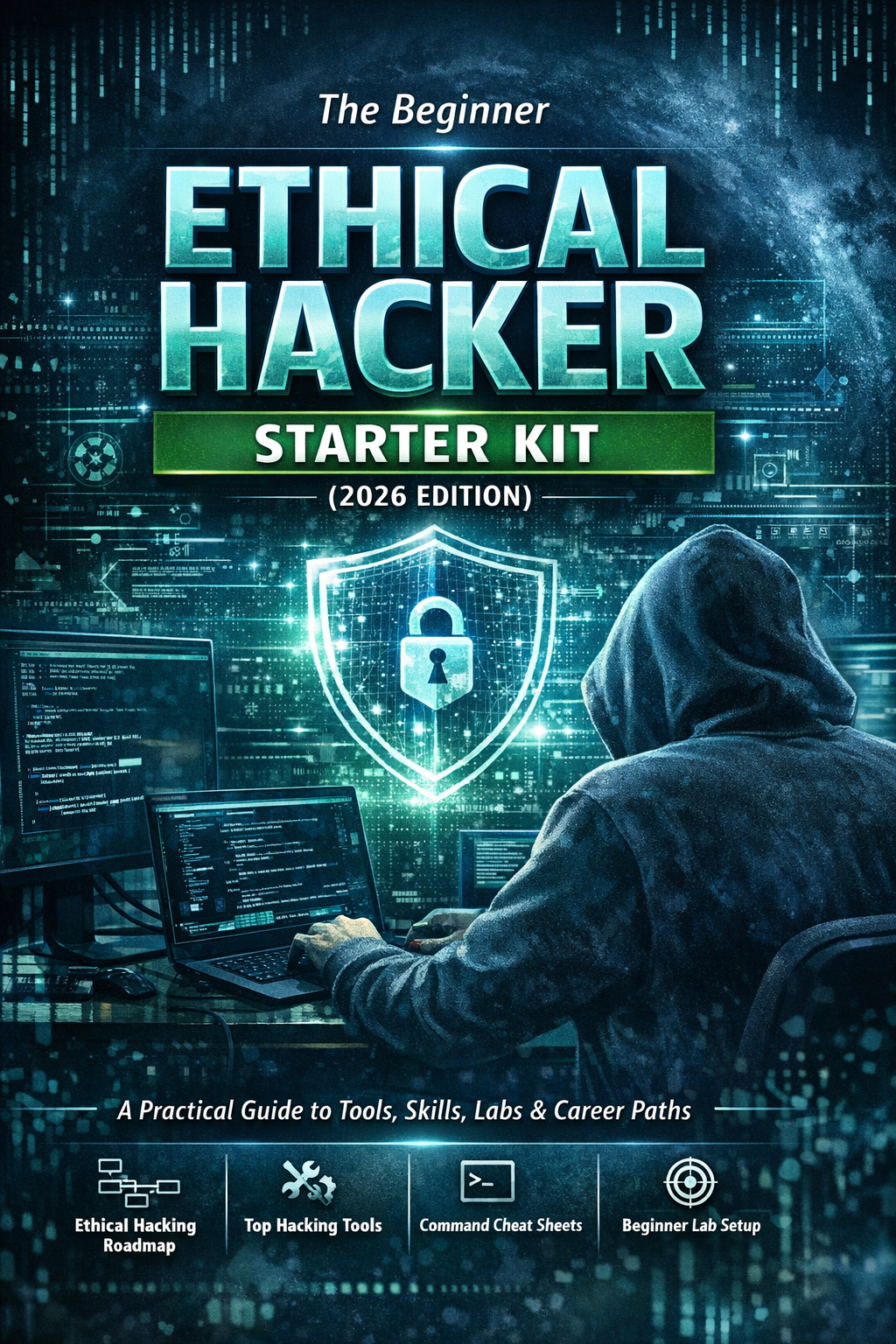
Start your ethical hacking journey with our FREE Beginner Ethical Hacker Starter Kit (2026 Edition).
Get beginner-friendly guidance to understand the fundamentals of ethical hacking and take your first steps into cybersecurity.

What Does an Ethical Hacker Actually Do?
Ethical hackers are security professionals who are authorized to identify weaknesses in systems before malicious attackers can exploit them.
Depending on the role, their work may include:
- Web application security testing
- Network security assessments
- Vulnerability assessment
- Cloud security testing
- API security testing
- Active Directory security assessments
- Mobile application security
- Red team operations
- Security research
- Penetration testing
- Security reporting and remediation guidance
The important word is authorized.
Ethical hacking is not about breaking into random websites or systems. Professional security testing takes place under defined rules, scope and authorization. That distinction becomes even more important as security tools become more powerful.

Is Cybersecurity Still Growing?
Current indicators suggest that cybersecurity remains an important employment area.
In the United States, the Bureau of Labor Statistics projects employment of information security analysts to grow 29% from 2024 to 2034, much faster than the average for all occupations. It projects approximately 16,000 openings per year on average over that period.
That does not mean every cybersecurity role will grow at exactly the same rate and information security analyst employment is broader than ethical hacking or penetration testing. However, it demonstrates something important:
Organizations continue to need people who can protect technology.
The broader cybersecurity workforce also continues to face skills shortages. Recent ISC2 research reports that cybersecurity professionals are still dealing with significant skills gaps, while cloud and AI-related capabilities are becoming increasingly important. So the question isn’t really whether cybersecurity will disappear.
The more useful question is:
Which cybersecurity skills will remain valuable as technology changes?

AI Is Changing Ethical Hacking
Artificial intelligence is probably the biggest reason people question the future of ethical hacking.
AI can already assist with tasks such as:
- Code analysis
- Vulnerability research
- Documentation
- Log analysis
- Security testing
- Threat analysis
- Report generation
- Data processing
- Security research
ISC2 research published in 2026 found that AI is increasingly becoming part of cybersecurity workflows. Security professionals reported that AI can accelerate areas including security testing, vulnerability management, network monitoring and security operations.
That might sound like bad news for aspiring ethical hackers. It isn’t necessarily. AI changes the work, not the fundamental need for security expertise. A tool can help identify a potential vulnerability.
A skilled security professional still needs to determine:
- Is the finding real?
- Is it exploitable?
- What is the actual impact?
- Is it within scope?
- How severe is it?
- What business process could be affected?
- How should it be fixed?
- How should the finding be communicated?
Human judgment remains extremely important. In fact, ISC2’s 2026 research found that many cybersecurity professionals are spending more time validating AI-generated recommendations and deciding when those recommendations should be trusted.
That creates a new skill:
AI-assisted security testing with human validation.

Will AI Replace Ethical Hackers?
Probably not in the simple way many headlines suggest. However, AI may reduce the amount of repetitive work performed manually. ISC2 reported that 56% of surveyed cybersecurity professionals said AI had somewhat or significantly reduced the need for entry-level positions over the previous year, while 53% believed AI was creating new types of entry-level roles.
This is an important warning for beginners. The entry-level cybersecurity market may become more competitive. If your only skill is following instructions generated by a tool, you will have difficulty standing out. If you understand systems deeply enough to question, validate, interpret and explain AI-generated results, you become much more valuable.

What Skills Will Ethical Hackers Need in 2027?
The most valuable skills will extend far beyond security tools.

1. Networking
Understand:
- TCP/IP
- DNS
- HTTP/HTTPS
- Ports
- Routing
- Firewalls
- Network architecture
Networking remains fundamental because applications and systems still communicate over networks.
2. Linux and Windows
You should understand how operating systems actually work. Learn:
- Users and groups
- Permissions
- Processes
- Services
- Logs
- Authentication
- System administration
- Security controls
3. Web and API Security
Modern applications increasingly rely on web interfaces and APIs.
Learn how:
- HTTP works
- Sessions work
- Authentication works
- Authorization works
- APIs communicate
- Applications interact with databases
- Security controls fail

4. Cloud Security
Cloud environments are now an important part of enterprise infrastructure. Learn the fundamentals of platforms such as AWS, Azure or Google Cloud, along with concepts such as:
- Identity and access management
- Cloud networking
- Storage permissions
- Secrets
- Logging
- Misconfiguration
- Cloud security architecture
ISC2’s recent workforce research identifies cloud and AI among the skills organizations increasingly need.
5. Active Directory and Identity
Enterprise identity systems remain extremely important. Understanding users, groups, permissions, authentication, delegation, policies and trust relationships can open the door to more advanced security work.
6. Programming and Scripting:
You don’t necessarily need to become a professional software developer but learning Python, PowerShell, Bash or another scripting language can help you automate repetitive tasks, understand applications, analyze data and build security tooling.
7. Reporting:
This is one of the most underrated ethical-hacking skills. Finding a vulnerability is only part of the job.
You also need to explain:
What is wrong?
Why does it matter?
What could happen?
How serious is it?
How should it be fixed?
A technically excellent finding that nobody understands is not a great security assessment.
READY TO BUILD YOUR ETHICAL HACKING FOUNDATIONS?
Go beyond the basics. Develop the essential knowledge every aspiring ethical hacker needs.
Your learning package includes:
Networking Fundamentals
Linux Fundamentals
Windows Fundamentals
Web Fundamentals
Command Line Essentials
Virtual Labs
$1 INTRODUCTORY TRIAL
6 Foundation Resources + Full Magazine Access
Trial terms apply. Post-trial subscription billing is manual.

Should Beginners Still Learn Penetration Testing?
Yes, but don’t approach penetration testing as a collection of commands. Instead, learn a methodology.
A simplified assessment might look like:
Reconnaissance → Enumeration → Vulnerability Analysis → Validation → Impact Assessment → Reporting
You should understand why each stage exists. For example, don’t just learn how to run a scanner. Learn how to interpret its output. Don’t just learn that an application has an access-control vulnerability. Understand why the application’s authorization model failed.
Don’t just identify a vulnerable service. Understand the underlying configuration and security boundary. That deeper understanding will remain valuable even when specific tools change.

What About Red Teaming?
Red teaming can be an excellent long-term specialization for people who enjoy adversary simulation and complex security assessments. However, it is usually not the best place to start.
A beginner should first build skills in:
Networking → Linux → Windows → Web → Security Fundamentals → Enumeration → Vulnerability Assessment
Then move toward areas such as:
Active Directory → Identity → Cloud → Red Teaming
This creates a much stronger foundation than attempting advanced red-team techniques immediately.

Is Ethical Hacking a Good Career for Beginners?
Yes, but beginners should have realistic expectations.
The biggest misconception is:
“I will learn Kali Linux, become good at hacking and immediately get a penetration-testing job.”
The actual path is usually more complicated. Your first cybersecurity role could be in:
- Security operations
- Vulnerability management
- IT support
- System administration
- Network administration
- Security engineering
- Application security
- Security testing
Some professionals move into penetration testing after gaining experience in another technical role. That is not a failure. It can actually give you stronger knowledge of how real organizations operate.

Do You Need a Degree?
It depends on the employer and role. Some organizations place strong emphasis on formal education while others place greater weight on demonstrated skills, certifications, experience and portfolios. The important point is not to assume that either a degree or no degree guarantees success.
A strong candidate can demonstrate:
Technical knowledge + Practical experience + Professional communication + Relevant qualifications
The requirements also vary significantly between countries and employers. For example, the U.S. Bureau of Labor Statistics notes that information security analysts typically need a bachelor’s degree, while employers may also prefer professional certification. Therefore, always examine the actual requirements of the jobs you want rather than relying on blanket statements about degrees.
Certifications: Are They Still Worth It?
Certifications can be useful, especially when you’re trying to demonstrate structured knowledge.
Depending on your goals, you might encounter certifications focused on:
- Networking
- Cybersecurity fundamentals
- Penetration testing
- Offensive security
- Cloud security
- Security management
But don’t collect certifications simply to fill your résumé. A certification should ideally support a broader learning plan.
For example:
Learn networking → build a lab → study networking certification material → document a project
is more valuable than:
Collect certification → move to another certification → collect another certification
Practical evidence matters.

Build a Portfolio in 2027
A portfolio can help demonstrate what you actually know. Build legal projects such as:
Network Security Lab:
Create an isolated network and document your discovery and security analysis.
Web Security Lab:
Use an intentionally vulnerable application and create a professional security report.
Windows Lab:
Build a Windows environment and document users, permissions, services, logs and security controls.
Active Directory Lab:
Create a controlled identity environment and study authentication, permissions and common security weaknesses.
Cloud Security Project:
Build a small cloud environment and document how identity, storage, networking and logging should be secured.
Your portfolio doesn’t need to contain hundreds of projects. A few well-documented projects can be much more useful.

The Ethical Hacker of 2027
The ethical hacker of 2027 will probably look different from the stereotypical hacker shown in movies.
They will need to understand:
Systems + Security + Cloud + Identity + AI + Business Risk
They will use automation rather than compete against it. They will know how to validate AI-generated results. They will understand that security testing exists to reduce risk—not simply to demonstrate that a vulnerability can be exploited.
They will also communicate with developers, system administrators, cloud engineers, managers and security teams. That combination is powerful.
So, Is Ethical Hacking Still a Good Career in 2027?
Yes—but it is no longer enough to simply learn hacking tools.
Cybersecurity continues to face skills shortages and current employment projections show strong demand for information-security professionals. At the same time, AI is changing entry-level work and automating some repetitive tasks. That means the opportunity is real but the bar is changing.
If you’re willing to learn networking, operating systems, web technologies, cloud, identity, security concepts and practical assessment methodology, ethical hacking can still be a rewarding career path. If you’re looking for a shortcut where you memorize commands and immediately become a professional penetration tester, 2027 may be a frustrating time to enter the field.
But if you enjoy understanding how technology works, solving difficult problems, continuously learning and helping organizations improve their security, the field remains highly relevant.

Conclsuion
The question shouldn’t simply be:
“Is ethical hacking still a good career in 2027?”
Ask yourself:
“Am I willing to become the kind of security professional that organizations will need in 2027?”
If the answer is yes, start with the fundamentals.
Learn networking.
Learn Linux and Windows.
Understand web applications.
Build safe labs.
Practice authorized security testing.
Learn cloud and identity.
Use AI as an assistant—but learn to validate its output.
Build a portfolio.
Learn to communicate,
and keep learning.
Ethical hacking isn’t disappearing.
It’s evolving and the professionals who evolve with it will be the ones who remain valuable.
YOUR ETHICAL HACKING JOURNEY STARTS HERE!
Not sure where to begin? Download our FREE 18-page Beginner Ethical Hacker Starter Kit (2026 Edition).
Take your first step towards building practical cybersecurity knowledge.