If you’re thinking about becoming an ethical hacker, you’ve probably asked yourself:
“What ethical hacking skills are needed for beginners?”
The internet is full of tool lists and shortcuts but here’s the truth:
- Ethical hacking is not about tools.
- It’s about skills, mindset and understanding systems deeply.
New to Ethical Hacking?
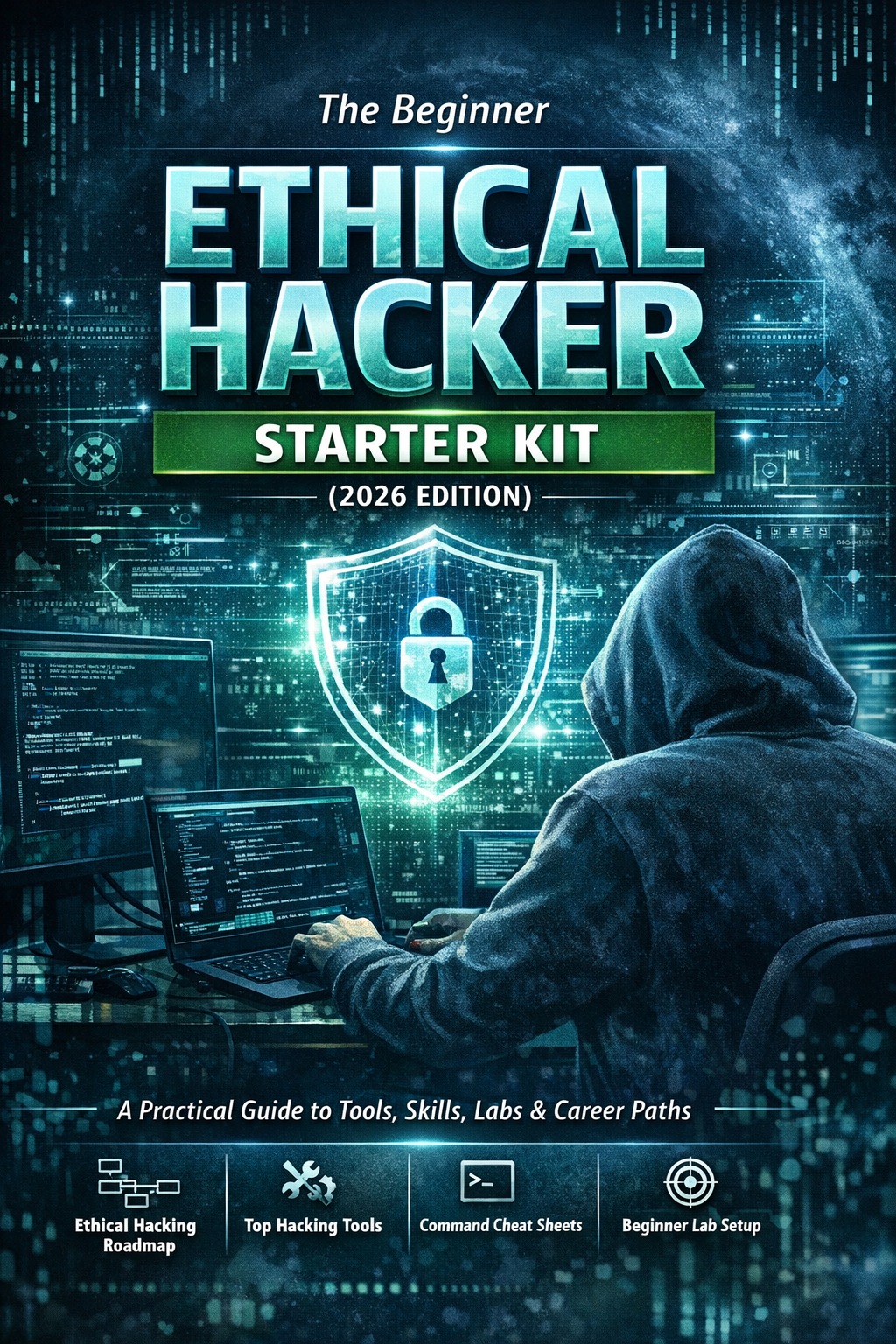
Start your journey with The Beginner Ethical Hacker Starter Kit (2026 Edition).
Inside the free guide, you’ll learn:.
- Ethical hacking fundamentals
- Beginner cybersecurity roadmap
- Essential hacking tools
- Common vulnerabilities explained
In this article, you’ll learn all the ethical hacking skills needed for beginners to become a perfect ethical hacker, explained in a beginner-friendly and practical way.

What Does an Ethical Hacker Really Do?
Before we talk about skills, let’s understand the role. An ethical hacker (or penetration tester) is someone who:
- Finds vulnerabilities in systems
- Simulates real-world attacks
- Helps organizations fix security weaknesses
In simple terms: You think like an attacker but work as a defender.

The 3 Core Skill Areas
To become an ethical hacker, you need skills in three main areas. They are,
1. Technical Skills:
Understanding how systems work.
2. Analytical Skills:
Thinking like a hacker
3. Ethical & Professional Skills:
Working responsibly and legally
Let’s break each of these down in detail.
Technical Skills (Your Foundations)
This is where your journey begins.

1. Networking Basics (Must-Learn):
Learning about networking basics is very important as you will not be hacking isolated single system as an ethical hacker. You will be hacking into networks. So, learn about
- IP addresses
- Subnets
- DNS
- HTTP/HTTPS
- TCP/UDP
Without networking, hacking won’t make sense.

2. Operating Systems:
You will not only be working on Operating Systems almost all the time but also target operating systems in ethical hacking. So, learn about different operating systems and the actual differences between them.
Focus on:
- Linux (mandatory)
- Basic Windows internals
Inside different operating systems, learn about:
- File systems
- Permissions
- Command line usage

3. Basic Programming:
You don’t need to be a developer or an expert programmer to become an ethical hacker but you should understand:
- Basic Python (most important)
- Basic scripting
- Reading code

4. Web Fundamentals:
Most attacks today target web apps. So, learning fundamentals of web is very important.
Learn about:
- HTML
- JavaScript basics
- How websites work
5. Security Concepts:
Understand:
- Authentication & authorization
- Encryption basics
- Common vulnerabilities
This is where hacking meets security.
Practical Skills (Hands-On Ability)
Knowing theory is not enough. You must practice.

6. Lab Setup & Practice:
Learn to:
- Set up virtual machines
- Use safe environments
- Practice legally
Real skill comes from doing.

7. Reconnaissance Skills:
Learn how to gather information:
- WHOIS
- DNS
- Google hacking
This is the first step in any attack.
8. Scanning & Enumeration:
Understand how to:
- Find open ports
- Identify services
This reveals entry points.

9. Exploitation Basics:
Learn:
- How vulnerabilities are used
- Basic attack techniques
This is where hacking happens.
10. Privilege Escalation:
Once inside a system:
- Learn how to gain higher access
This separates beginners from skilled hackers.

Want to Learn Ethical Hacking Step-by-Step?
If you’re serious about learning cybersecurity, a structured roadmap makes the journey much easier.
Download The Beginner Ethical Hacker Starter Kit (2026 Edition) and discover:
✔ The ethical hacking learning path
✔ Beginner-friendly security concepts
✔ Essential tools ethical hackers use
✔ The most common vulnerabilities explained
Analytical Skills (Think Like a Hacker)
Technical knowledge alone is not enough. You must develop the right mindset.
11. Problem-Solving Skills:
Every system is different.
You need to:
- Analyze situations
- Try different approaches
12. Curiosity:
Always ask yourself questions like:
- What else is hidden?
- What can go wrong?
Curiosity drives discovery.
13. Critical Thinking:
Don’t blindly follow tools. Instead:
- Understand why something works
14. Persistence:
You will fail often. The key is:
- Keep trying
- Keep learning

Ethical & Professional Skills
These skills are often ignored but are very important.
15. Ethics & Responsibility:
Never:
- Hack without permission
- Access private data
Always:
- Follow legal guidelines
Your reputation matters.
16. Communication Skills:
You must:
- Write reports
- Explain vulnerabilities
Clients need to understand your findings.
17. Documentation:
Keep records of:
- Tests
- Findings
- Methods
This improves your workflow.
18. Teamwork:
In real jobs, you work with:
- Developers
- Security teams
Collaboration is important.
Do You Need to Learn Tools?
Yes—but not first. In later stages you have to learn tools like:
- Scanners
- Web testing tools
- Exploitation frameworks
Tools are only useful if you understand the concepts.
Skill Development Roadmap
Here’s how to build these skills step by step:
Month 1-2:
- Networking
- Linux basics
Month 3-4:
- Web fundamentals
- Security concepts
Month 5-6:
- Hands-on labs
- Basic tools
Month 6+:
- Real-world scenarios
- Advanced practice
Focus on consistency.

Common Mistakes Beginners Make
Given below are the most common mistakes beginners make. Avoid these.
Focusing Only on Tools:
You won’t understand what you’re doing.
Skipping Fundamentals:
This slows your progress.
Watching Without Practicing:
Learning requires action.
Trying to Learn Everything at once:
Focus on one area at a time.
Giving Up Early:
Cybersecurity learning takes time.

How to Learn These Skills Faster
Practice Daily:
Even 1–2 hours helps.
Build & Break Labs:
Create systems and test them.
Take Notes:
Build your own knowledge base.
Repeat Concepts:
Repetition builds mastery.
Join Communities:
Learn from others.

Career Opportunities
Once you develop these skills, you can become:
- Penetration Tester
- Security Analyst
- Bug Bounty Hunter
- Red Team Operator
The better your skills, the more opportunities you get.
How Long Does It Take?
- 3 months → Basic understanding
- 6 months → Practical skills
- 12 months → Job-ready
Consistency is the key.
Conclusion
Becoming an ethical hacker is not about knowing everything. It’s about:
- Building strong fundamentals
- Practicing consistently
- Thinking like a problem solver
If you focus on the right skills, you won’t just learn ethical hacking… You’ll become someone who understands how systems break and how to protect them.
Start Your Ethical Hacking Journey Today
Learning cybersecurity can feel overwhelming at first. The best way to start is with a clear roadmap and the right resources.
Download The Beginner Ethical Hacker Starter Kit (2026 Edition) and get instant access to:
Ethical Hacking Fundamentals
A beginner cybersecurity learning roadmap
Essential hacking tools every beginner should know
Common vulnerabilities explained simply