

If you’ve ever been curious about hacking but want to use those skills legally and professionally, then ethical hacking might be the perfect career for you. The problem?
Most beginners don’t know where to start. They jump between random tutorials, tools and courses… and end up confused. This beginners guide gives you a clear, step-by-step career roadmap to become an ethical hacker from zero to job-ready.
New to Ethical Hacking?
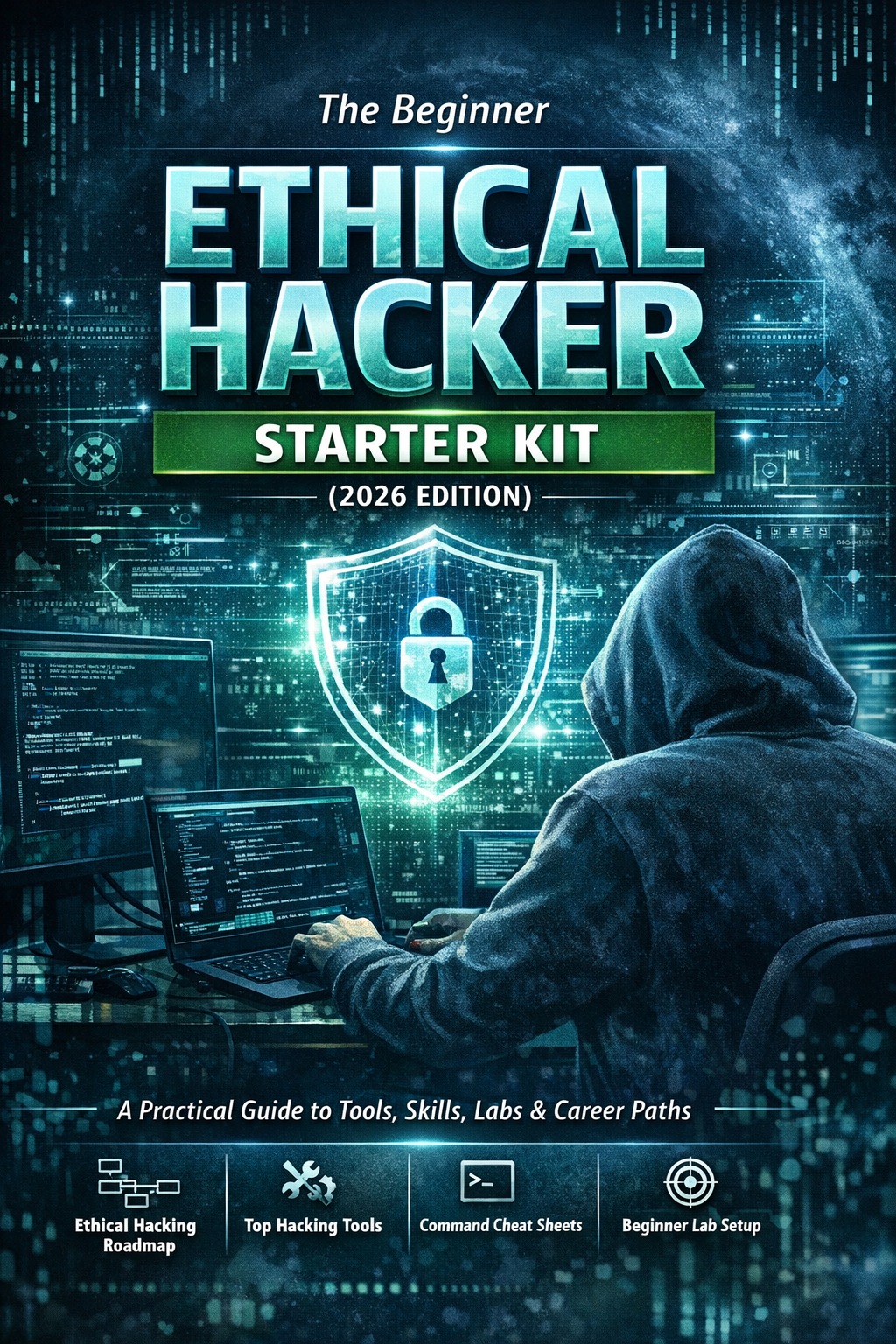
Start your journey with The Beginner Ethical Hacker Starter Kit (2026 Edition).
Inside the free guide, you’ll learn:.
- Ethical hacking fundamentals
- Beginner cybersecurity roadmap
- Essential hacking tools
- Common vulnerabilities explained

Who is an Ethical Hacker?
An ethical hacker (also called a penetration tester) is a professional who tests systems for security weaknesses—with permission. Instead of causing damage, ethical hackers:
- Find vulnerabilities
- Report them responsibly
- Help organizations fix them
In simple terms: You hack to protect.

Why Choose Ethical Hacking as a Career?
There are many reasons for choosing Ethical Hacking as your career. Here are the important ones.
1. Massive Demand:
Companies need skilled professionals to defend against various kinds of hacking attacks like ransomware, data breaches and AI-driven attacks.
2. High Paying Careers:
Due to the massive demand, even entry-level cybersecurity roles offer strong salaries compared to many other tech fields.
3. Global Opportunities:
You can work remotely, freelance or participate in bug bounty programs worldwide.
4. Challenging & Fun:
Ethical hacking is never boring. New vulnerabilities, tools and techniques emerge constantly and this presents a continuous learning opportunity.
Ethical Hacker Career Roadmap (Overview)
Here’s an overview of the path you should follow to make a career as an Ethical Hacker:
- Learn fundamentals
- Build technical skills
- Practice in labs
- Learn tools
- Gain real-world experience
- Apply for jobs
Let’s break this down step by step for you.

Step 1: Learn the Fundamentals (Month 1–2)
You know what many beginners do when they want to start learning ethical hacxking? They jump straight into operating systems like Kali Linux, Parrot Security OS etc. This is a mistake. You need a foundation first.
1. Networking Basics:
Learning about networking basics is very important as you will not be hacking islolated single system as an ethical hacker. You will be hacking into networks. So, learn about
- IP addresses
- Subnets
- DNS
- HTTP/HTTPS
- TCP/UDP
If you don’t understand how networks work, hacking won’t make sense.
2. Operating Systems:
As an ethical hacker, you will not only be working on Operating Systems almost all the time but also target operating systems in your career. So, learn about different operating systems and the differences between them.
Focus on:
- Linux (mandatory)
- Basic Windows internals
Inside different operating systems, Learn:
- File systems
- Permissions
- Command line usage
3. Basic Programming:
You don’t need to be a developer or an expert programmer to become an ethical hacker, but you should understand:
- Python (most important)
- Basic scripting
- Reading code
4. Web Fundamentals:
Most attacks today target web apps. So, learning fundamentals of web is very important.
Learn:
- HTML
- JavaScript basics
- How websites work

Step 2: Build Your Practice Environment (Month 2–3)
You can’t master ethical hacking just by studying theory. You need hands-on practice to do that. Never and never practice on real-world systems. Create a safe lab environment.
What You Need:
- A laptop (8GB+ RAM recommended)
- Virtualization software (VirtualBox / VMware)
- Kali Linux
Targets for Practice:
- Intentionally Vulnerable machines like Metasploitable.
- Capture-the-flag platforms
This is where real learning happens.
Step 3: Learn the Hacking Process (Month 3–4)
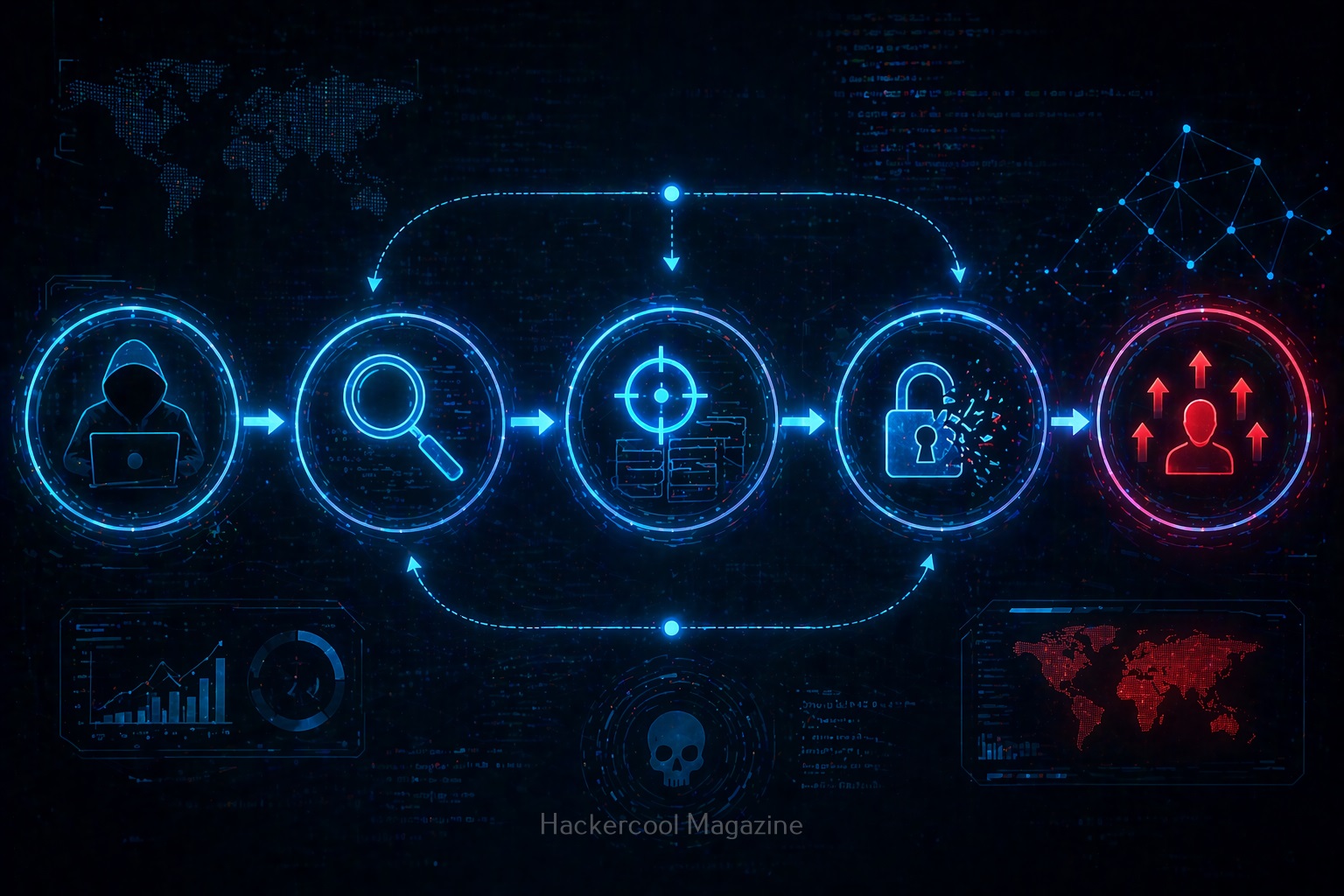
Ethical hacking is a broad field. Learn it by focusing on the key areas shown below.
1. Reconnaissance (Information Gathering):
This is the first step of any hacking attack. In this, you learn how to:
- Find subdomains
- Gather public data about your target.
- Identify attack surfaces
2. Scanning & Enumeration:
In this phase, you use tools to help you identify:
- Open ports
- Services
- Vulnerabilities
3. Exploitation:
This is where actual hacking happens. In this phase, you learn:
- How vulnerabilities are abused
- How attackers gain access
Once inside a system or network, you will focus on:
- How to gain admin/root access
In this phase, the following actions are performed.
- Maintaining access
- Extracting data
- Covering tracks (for learning purposes)
Step 4: Learn Essential Tools (Month 4–6)
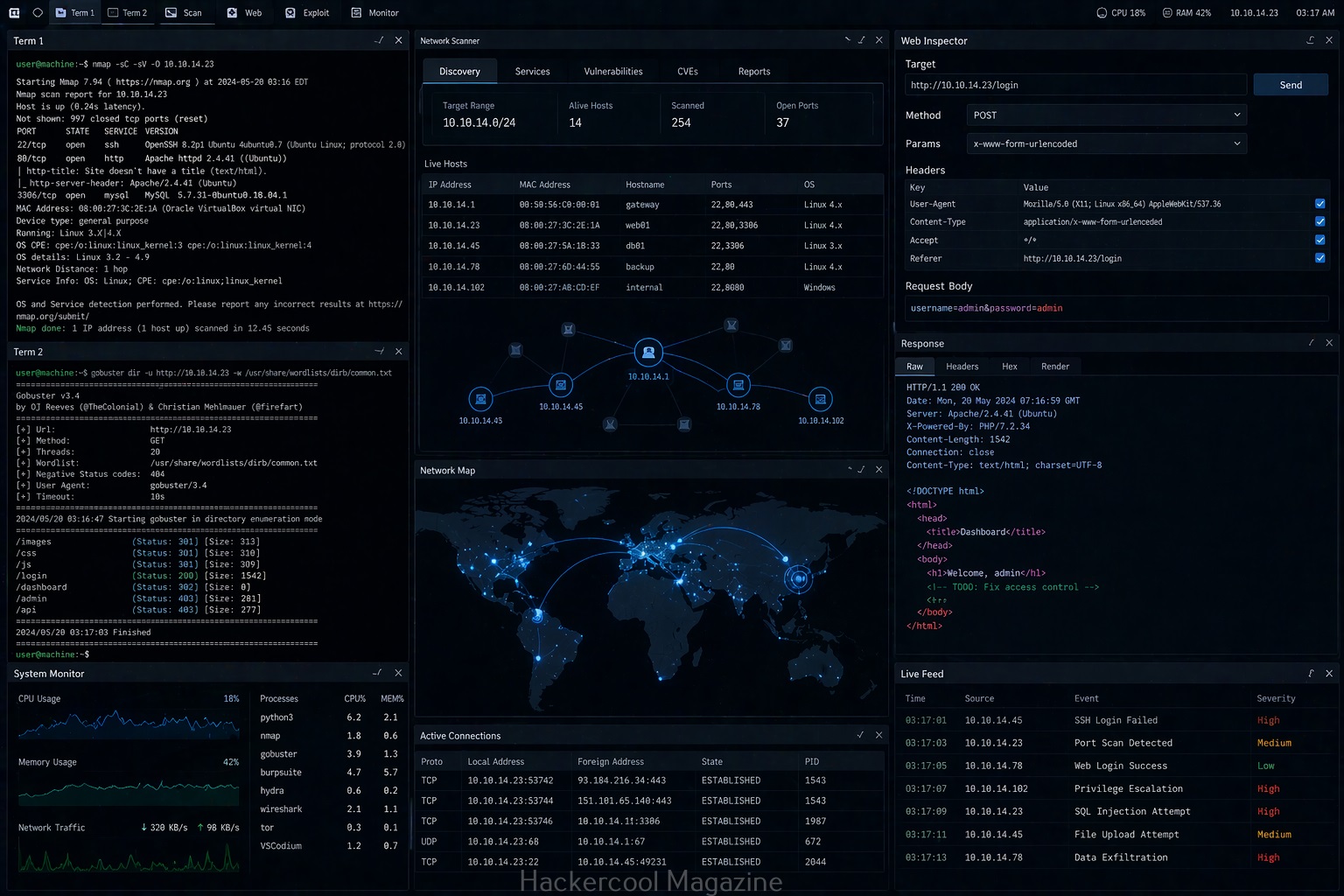
Start with a small set of tools.
- Network scanning tools like Nmap and Amass
- Web testing tools like Nkto
- Directory brute-forcing tools like dirb and dirbuster
Focus on:
- Why the tool works
- When to use it
Not just how to run it.

Step 5: Build Real Skills (Months 5–8)
Now, move beyond basics.
1. Practice Real Scenarios:
- Solve CTF challenges
- Work on vulnerable labs
2. Document everything:
Keep notes on:
- Techniques
- Commands
- Mistakes
3. Repeat:
Revisit labs and improve. This is how beginners become skilled.

Want to Learn Ethical Hacking Step-by-Step?
If you’re serious about learning cybersecurity, a structured roadmap makes the journey much easier.
Download The Beginner Ethical Hacker Starter Kit (2026 Edition) and discover:
✔ The ethical hacking learning path
✔ Beginner-friendly security concepts
✔ Essential tools ethical hackers use
✔ The most common vulnerabilities explained
Step 6: Build a Portfolio (Months 6–9)
To get a job, you need proof of skills. So, start building a portfolio.
What to include in your portfolio:
- Lab writeups
- CTF solutions
- Learning notes
Show your thinking process—not just results.
Step 7: Certifications (Optional but Helpful)
Certifications can boost your credibility. But remember: Skills matter more than certificates.

Step 8: Apply for Jobs (Months 9–12)
Start with entry-level roles like Security Analyst, Junior Penetration Tester, SOC Analyst etc. Don’t wait until you feel “perfect.” Start applying early.
Common Mistakes Beginners Make
Here are some of the most common mistakes beginners often make in their journey to become an ethical hacker. Avoid these.
1. Skipping Fundamentals:
Doing this leads to confusion in later stages.
2. Tool Overload:
Learning too many tools at once leads to no mastery.
3. Passive Learning:
Watching tutorials is not learning.
4. No Practice:
Cybersecurity requires hands-on work.
5. Giving up too early:
Progress takes time.

How to Learn Faster (Pro Tips)?
Here are some tips to accelerate your learning and practice like a real hacker.
Think Like an Attacker:
While learning, ask yourself questions like:
- What can go wrong here?
- Where is the weakest point?
Practice Daily:
Even 1–2 hours helps.
Take Notes:
Build your own knowledge base.
Join Communities:
This can help you to learn from others.
Stay Consistent:
Consistency always beats intensity.

Career Paths in Ethical Hacking
Once you build your skills, you can choose one of the career paths in ethical hacking. Some of the paths you can take as an ethical hacker are,
Penetration Tester:
A penetration tester simulates real-world attacks on systems and networks.
Security Analyst:
A Security Analyst is a person who monitors and defends systems.
Bug Bounty Hunter:
A Bug Bounty Hunter finds vulnerabilities and gets paid for reporting them responsibly.
Red Team Operator:
A Red Team Operator plays advanced offensive security role.
How Long Does It Take?
Many people ask how long does it take to learn ethical hacking. Realistically speaking:
- 3 months → Basic understanding
- 6 months → Hands-on skills
- 12 months → Job-ready (if consistent)
Consistency is the key here.
Legal & Ethical Responsibility
This is critical. Never:
- Hack systems without permission
- Access unauthorized data
Always:
- Practice in legal environments
- Follow ethical guidelines
Remember. Your reputation is everything in cybersecurity.

Conclusion
Becoming an ethical hacker is not about shortcuts. It’s about:
- Building strong fundamentals
- Practicing consistently
- Staying patient
If you follow this roadmap, you’ll go from beginner to professional step by step.
Start Your Ethical Hacking Journey Today
Learning cybersecurity can feel overwhelming at first. The best way to start is with a clear roadmap and the right resources.
Download The Beginner Ethical Hacker Starter Kit (2026 Edition) and get instant access to:
✔ Ethical hacking fundamentals
✔ A beginner cybersecurity learning roadmap
✔ Essential hacking tools every beginner should know
✔ Common vulnerabilities explained simply


That’s a really helpful breakdown – it’s easy to get lost in all the options out there. Focusing on a structured approach like this is definitely a good starting point.