Cybersecurity is not a subject that can be learned through theory alone. You can read about networking, Linux, web security, malware, penetration testing and vulnerability assessment for months. However, practical experience is what helps you understand how systems actually behave.
This is where hands-on cybersecurity training becomes important. Fortunately, beginners do not need an expensive enterprise laboratory to start learning. Today, several platforms provide free cybersecurity labs, challenges, virtual machines, Capture the Flag exercises and interactive learning environments.
These platforms allow learners to practice skills in controlled and authorized environments. In this guide, we’ll explore some of the best free platforms beginners can use to learn cybersecurity hands-on, the skills they can practice and how to choose the right platform for their learning journey.
New to Ethical Hacking?
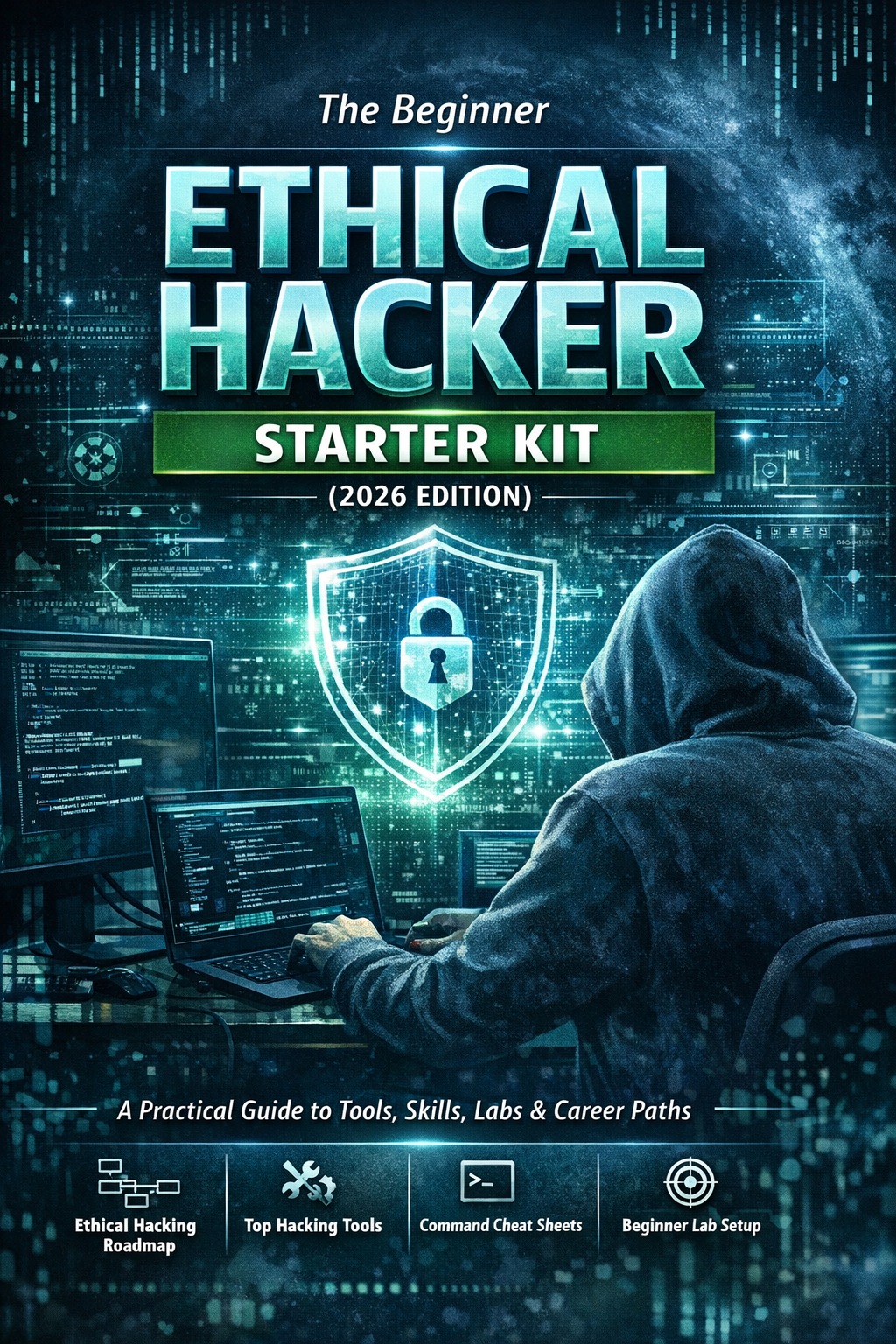
Start your journey with The Beginner Ethical Hacker Starter Kit (2026 Edition).
Inside the free guide, you’ll learn:.
- Ethical hacking fundamentals
- Beginner cybersecurity roadmap
- Essential hacking tools
- Common vulnerabilities explained

Why Hands-On Cybersecurity Practice Matters
Cybersecurity involves understanding real systems. For example, reading about network scanning is useful but using a scanner against an authorized practice network teaches you much more about:
- Hosts
- Ports
- Services
- Network protocols
- Service identification
- Security findings
The same applies to web security.
You can read about HTTP requests and responses, authentication, cookies and vulnerabilities. But interacting with a deliberately vulnerable application helps you understand how those concepts work together.
Hands-on practice helps beginners:
- Build technical confidence
- Understand tools more effectively
- Learn from mistakes
- Develop problem-solving skills
- Connect theory with real systems
- Prepare for cybersecurity roles
The key is to practice responsibly. Only use platforms, labs and systems where security testing is explicitly authorized.

1. TryHackMe
TryHackMe is one of the most beginner-friendly platforms for hands-on cybersecurity learning. It provides guided learning environments that introduce cybersecurity concepts step by step.
Depending on the available free content, beginners can explore areas such as:
- Linux fundamentals
- Networking
- Web security
- Security operations
- Penetration testing
- Digital forensics
- Privilege escalation concepts
- Capture the Flag challenges
One of the major advantages of guided labs is that beginners don’t have to figure out everything alone. A challenge may introduce a concept, explain the objective and then provide an environment where the learner can practice. This makes TryHackMe particularly useful for people who are completely new to cybersecurity.
Best for: Beginners who prefer structured learning.

2. Hack The Box
Hack The Box provides hands-on cybersecurity training through realistic challenges and lab environments. The platform is widely associated with Capture the Flag-style learning and practical technical challenges. Compared with highly guided beginner platforms, some Hack The Box content may require more independent research and problem-solving.
Learners may encounter challenges involving:
- Linux
- Windows
- Networking
- Web applications
- Enumeration
- Vulnerability research
- Security analysis
The platform can be valuable for learners who want to gradually transition from guided exercises toward more independent cybersecurity problem-solving. Beginners may find it useful to build foundational skills first and then use more challenging environments as their confidence grows.
Best for: Learners moving from guided labs toward independent challenges.

3. PortSwigger Web Security Academy
PortSwigger Web Security Academy is one of the best resources for learning web application security. It combines educational material with interactive labs designed to teach common web security concepts.
Learners can explore topics such as:
- Authentication security
- Access control
- Session management
- Input validation
- Common web vulnerabilities
- HTTP behavior
- Application security concepts
A major advantage is that learners can study a concept and then practice it inside an intentionally vulnerable lab.
This creates a useful learning cycle:
Learn → Practice → Observe → Understand
For beginners interested in web security and application testing, this is an excellent platform to include in a learning plan.
Best for: Web application security and HTTP fundamentals.

4. PicoCTF
picoCTF is designed around cybersecurity challenges and problem-solving. It introduces learners to a variety of technical areas through Capture the Flag exercises.
Depending on the challenge, learners may practice concepts related to:
- Cryptography
- Web security
- Forensics
- Linux
- Programming
- General cybersecurity problem-solving
CTF challenges are particularly useful because they encourage learners to investigate, experiment, research and think creatively. Rather than simply following instructions, you are often required to understand the problem and determine an appropriate solution.
This helps develop one of the most important cybersecurity skills: problem-solving.
Best for: Beginners who enjoy puzzles and technical challenges.

5. OverTheWire
OverTheWire is a popular resource for developing Linux and command-line skills. Strong Linux knowledge is extremely valuable in cybersecurity.
Before focusing heavily on advanced security tools, beginners should become comfortable with concepts such as:
- Files and directories
- Permissions
- Users
- Processes
- Services
- Command-line navigation
OverTheWire uses progressively challenging games that encourage learners to solve technical problems through practical interaction. It is especially useful for beginners who feel uncomfortable working in a Linux terminal.
Best for: Linux and command-line fundamentals.

6. OWASP Juice Shop
OWASP Juice Shop is an intentionally vulnerable web application designed for security training. It provides a controlled environment for learning about web application security. Rather than practicing against a real website, learners can safely explore security concepts within an application specifically designed for education. This makes intentionally vulnerable applications extremely valuable for beginners.
A good learning approach is:
- Learn the web security concept.
- Understand the underlying technology.
- Practice in an authorized training environment.
- Observe the application’s behavior.
- Study how the issue can be prevented.
Best for: Hands-on web security practice.
7. OWASP WebGoat
OWASP WebGoat is another intentionally insecure application designed to teach web security. WebGoat is structured around lessons and exercises that help learners understand security problems through interaction.
It can be especially useful for beginners who want more than a challenge and prefer a learning environment that connects exercises with educational explanations. Practicing inside an intentionally vulnerable application is safer and more productive than experimenting against real websites.
Best for: Guided web application security learning.
Want to Learn Ethical Hacking Step-by-Step?
If you’re serious about learning cybersecurity, a structured roadmap makes the journey much easier.
Download The Beginner Ethical Hacker Starter Kit (2026 Edition) and discover:
✔ The ethical hacking learning path
✔ Beginner-friendly security concepts
✔ Essential tools ethical hackers use
✔ The most common vulnerabilities explained
8. DVWA
Damn Vulnerable Web Application (DVWA) is a deliberately vulnerable web application used for learning web security. DVWA is commonly used in home labs and cybersecurity training environments. You can run it in your own controlled environment as it gives you more flexibility to experiment and observe how applications, servers and security tools interact.
It can also be useful when learning alongside tools such as:
- Burp Suite
- OWASP ZAP
- Web server scanners
Always keep vulnerable applications appropriately isolated and use them only in controlled training environments.
Best for: Building a personal web-security practice lab.

9. CyberDefenders
CyberDefenders focuses on defensive cybersecurity and investigation challenges. Not every cybersecurity learner wants to become a penetration tester. Defensive roles are equally important.
Hands-on defensive challenges can help learners practice analyzing:
- Security alerts
- Logs
- Suspicious files
- Network activity
- Digital evidence
- Incident data
This introduces beginners to areas such as:
- Security Operations Centers
- Digital forensics
- Incident response
- Threat detection
If you’re interested in blue-team cybersecurity, platforms that focus on investigation can be a valuable addition to your learning plan.
Best for: Defensive cybersecurity and investigation.
10. LetsDefend
LetsDefend provides practical cybersecurity training with a focus on Security Operations Center concepts.
Learners can experience scenarios involving:
- Security alerts
- Incident investigation
- Threat detection
- Log analysis
- SOC workflows
This can help beginners understand what defensive cybersecurity work looks like. Instead of only learning about tools, learners can practice investigating suspicious activity and making decisions based on available evidence.
Best for: Beginners interested in SOC and blue-team careers.

How to Choose the Right Cybersecurity Platform
You don’t need to use each and every platform at once. The best platform depends on your current skill level and career interests.
If You Are Completely New:
Start with:
- TryHackMe
- OverTheWire
- PicoCTF
Focus on:
- Networking
- Linux
- Basic cybersecurity concepts
- Command-line skills
If You Want to Learn Web Security:
Focus on:
- PortSwigger Web Security Academy
- OWASP Juice Shop
- OWASP WebGoat
- DVWA
Study HTTP before moving into more advanced web-security topics.
If You Want to Learn Penetration Testing:
Start with guided labs and gradually progress toward more independent environments.
A possible combination is:
Networking → Linux → TryHackMe → Hack The Box → Personal Home Lab
If You Want to Learn Defensive Cybersecurity:
Explore:
- CyberDefenders
- LetsDefend
Also learn:
- Networking
- Windows fundamentals
- Linux
- Log analysis
- Incident response

Build a Structured Learning Routine
A common beginner mistake is jumping randomly between platforms. Instead, create a simple learning routine.
For example:
Week 1
Focus on Linux and networking fundamentals.
Week 2
Practice basic network discovery and service identification in authorized labs.
Week 3
Learn web application fundamentals and HTTP.
Week 4
Practice web-security concepts using intentionally vulnerable applications.
Week 5
Complete beginner CTF challenges.
Week 6
Study vulnerability assessment and basic defensive monitoring.
The exact schedule isn’t important. Consistency matters more. Even a few hours of practical learning each week can gradually build valuable skills.

Keep Notes While You Practice
Hands-on learning becomes much more effective when you document what you learn.
For each lab, record:
- The objective
- Concepts learned
- Tools used
- Observations
- Problems encountered
- How you solved them
- New terminology
- Defensive lessons
Over time, these notes can become your personal cybersecurity knowledge base. They can also help you identify areas where you need more practice.

Don’t Focus Only on Tools
Tools are important but remember that cybersecurity is not about memorizing commands.
Understanding is more valuable.
Instead of asking:
“Which command should I run?”
Ask:
“What am I trying to learn about this system?”
Learn:
- How networks communicate
- How operating systems work
- How web applications process requests
- How authentication works
- How vulnerabilities occur
- How defenders detect suspicious activity
Once you understand the fundamentals, learning new cybersecurity tools becomes much easier.

Practice Legally and Responsibly
The most important rule is simple:
Only practice where you have explicit authorization.
Use:
- Cybersecurity training platforms
- Capture the Flag environments
- Intentionally vulnerable applications
- Personal home labs
- Systems you own
Do not practice against random websites, public networks, company infrastructure or other systems simply because they are accessible. Being able to access a system does not mean you are authorized to security-test it. Professional cybersecurity skills include understanding technical boundaries as well as ethical and legal boundaries.

Conclusion
Free hands-on cybersecurity platforms make it easier than ever for beginners to develop practical skills. You can learn Linux through interactive challenges, study networking in guided labs, practice web security with intentionally vulnerable applications, investigate security incidents and solve cybersecurity challenges without needing access to real organizational systems.
The best approach is to start with fundamentals.
Learn networking.
Learn Linux.
Choose one hands-on platform.
Practice consistently.
Take notes.
Build a small home lab when you’re ready.
Then gradually explore more specialized areas such as penetration testing, web security, digital forensics, threat detection and incident response. Cybersecurity is a long-term learning journey. You don’t need to master every platform.
Start with one, practice regularly and most importantly, keep your learning inside safe and authorized environments. Over time, hands-on experience will help transform cybersecurity concepts from things you simply recognize into skills you genuinely understand.
Start Your Ethical Hacking Journey Today
Learning cybersecurity can feel overwhelming at first. The best way to start is with a clear roadmap and the right resources.
Download The Beginner Ethical Hacker Starter Kit (2026 Edition) and get instant access to:
Ethical Hacking Fundamentals
A beginner cybersecurity learning roadmap
Essential hacking tools every beginner should know
Common vulnerabilities explained simply