

If you’re starting your cybersecurity journey, you’ve probably noticed there are thousands of tools available for use. Some are designed for network analysis, others focus on web application security, digital forensics, password auditing or incident response.
Seeing so many options can be overwhelming.
The good news is that you don’t need to learn every cybersecurity tool to build a strong foundation. Most professionals begin with a handful of essential tools that help them understand how networks, operating systems and applications work.
Remember, cybersecurity is not about collecting software—it’s about understanding technology and using the right tools to solve security problems. In this guide, we’ll explore the essential cybersecurity tools every beginner should know, why they matter and the skills you’ll develop by learning them.
New to Ethical Hacking?
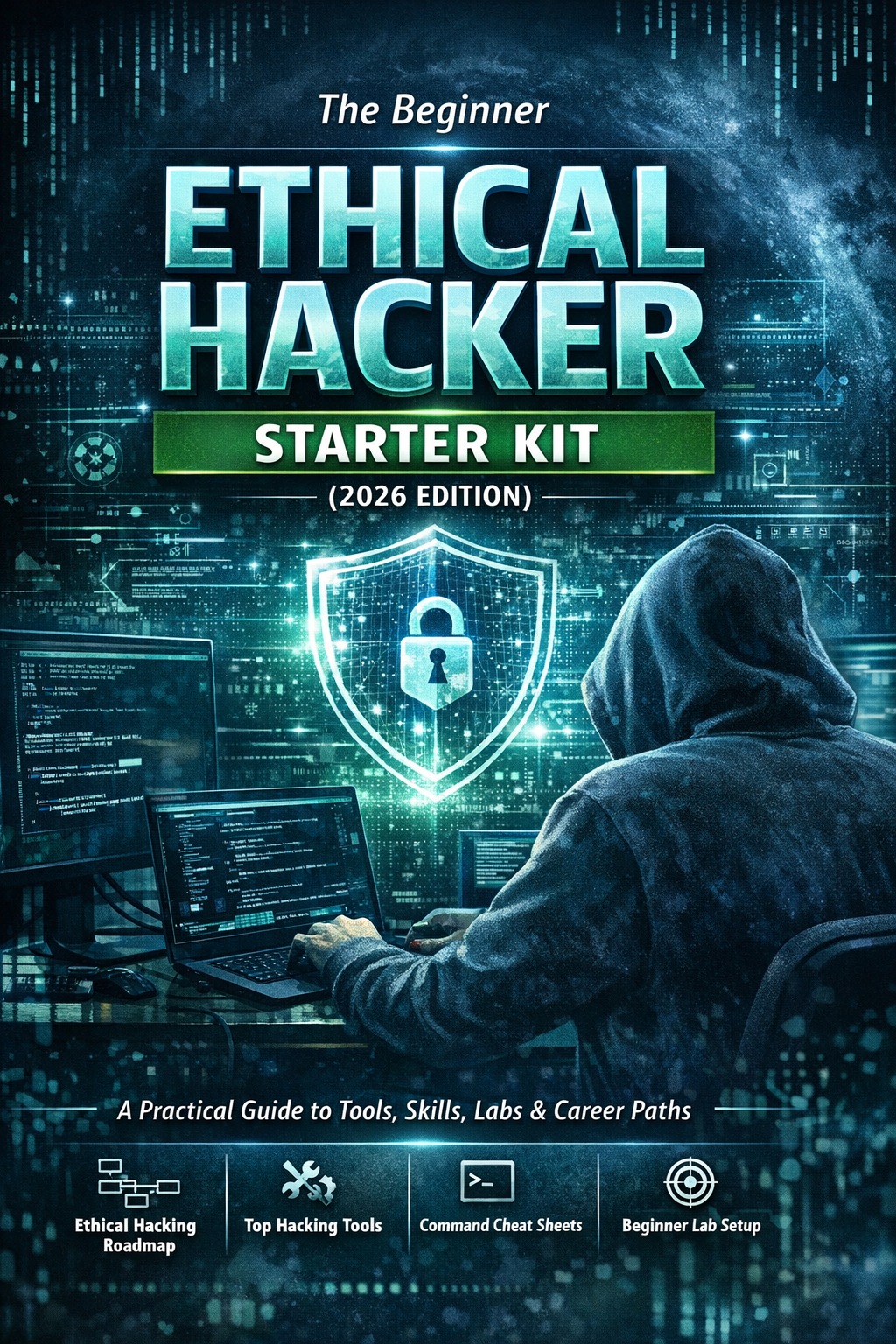
Start your journey with The Beginner Ethical Hacker Starter Kit (2026 Edition).
Inside the free guide, you’ll learn:.
- Ethical hacking fundamentals
- Beginner cybersecurity roadmap
- Essential hacking tools
- Common vulnerabilities explained

Why Cybersecurity Tools Matter
Modern computer systems generate enormous amounts of information every second.
Imagine trying to:
- Analyze millions of network packets
- Monitor hundreds of servers
- Identify vulnerable systems
- Investigate suspicious activity
Doing this manually would be nearly impossible. Cybersecurity tools help professionals:
- Automate repetitive tasks
- Collect information
- Analyze systems
- Improve efficiency
- Document findings
- Monitor security
However, remember that tools are only as effective as the person using them.
1. Nmap
Nmap is one of the most widely used network scanning tools.
It helps identify:
- Active devices
- Open ports
- Running services
- Network structure
Why Beginners Should Learn It?
Nmap teaches important networking concepts that form the foundation of ethical hacking and penetration testing.
2. Wireshark
Wireshark is a packet analyzer that captures and displays network traffic. Instead of guessing how computers communicate, you can actually observe network packets moving between devices.
Skills You’ll Learn while using this tool:
- TCP/IP
- DNS
- HTTP
- Network troubleshooting
- Packet analysis
3. Burp Suite Community Edition
Burp Suite is one of the most popular web application security tools. It allows you to inspect communication between a web browser and a web server.
Why It Matters
Modern businesses rely heavily on web applications. Learning Burp Suite helps you understand:
- HTTP requests
- Responses
- Cookies
- Sessions
- Authentication
4. OWASP ZAP
OWASP ZAP is another excellent web application security tool. It is open source and beginner-friendly.
Skills You’ll Develop
- Web application analysis
- Security scanning
- Website structure
- Request inspection
5. WiFite and Aircrack-ng
Wireless networking is another important area of cybersecurity. These tools help beginners understand:
- Wi-Fi communication
- Wireless encryption
- Authentication
- Network security concepts
Always use them only on networks you own or are authorized to test.
6. John the Ripper
John the Ripper is a password auditing tool. It demonstrates the importance of strong password policies.
You’ll Learn
- Password security
- Authentication
- Hashes
- Secure credentials
7. Hashcat
Hashcat is another password auditing tool used to understand password hashing and authentication security. Learning Hashcat reinforces why organizations should use strong passwords and secure authentication methods.
8. Gobuster
Gobuster helps discover hidden directories and files within web applications. It teaches beginners how websites are organized and why hidden resources should be properly secured.
9. Nikto
Nikto is a web server scanner. It analyzes web servers for common security issues and configuration problems. This introduces beginners to web server security concepts.
10. Maltego
Maltego is an investigation and visualization tool. It helps organize relationships between:
- Domains
- Organizations
- People
- Email addresses
- Infrastructure
Why Learn It
It develops critical thinking and investigative skills.
11. TheHarvester
TheHarvester collects publicly available information from online sources. It introduces beginners to Open-Source Intelligence (OSINT) and demonstrates how organizations leave digital footprints.
12. Metasploit Framework
Metasploit is one of the best-known penetration testing frameworks. It helps security professionals validate security controls and study vulnerabilities in authorized environments. Beginners should first understand networking and operating systems before exploring Metasploit.

Categories of Cybersecurity Tools
Instead of memorizing individual tools, think of them by category.

Network Analysis:
- Nmap
- Wireshark

Web Security:
- Burp Suite
- OWASP ZAP
- Gobuster
- Nikto

Password Security:
- John the Ripper
- Hashcat

Want to Learn Ethical Hacking Step-by-Step?
If you’re serious about learning cybersecurity, a structured roadmap makes the journey much easier.
Download The Beginner Ethical Hacker Starter Kit (2026 Edition) and discover:
✔ The ethical hacking learning path
✔ Beginner-friendly security concepts
✔ Essential tools ethical hackers use
✔ The most common vulnerabilities explained
- WiFite
- Aircrack-ng

OSINT:
- Maltego
- TheHarvester

Penetration Testing:
Metasploit Framework
Learning categories helps you understand where each tool fits into a professional workflow.

Build Your Skills Before Your Toolkit
Many beginners download dozens of cybersecurity tools without learning how they work. This usually leads to confusion.
Instead:
Learn one concept. Then learn one tool.
Practice. Repeat.
For example:
Understand networking before learning network scanners.
Understand HTTP before learning web security tools.
Understand passwords before learning password auditing tools.
Knowledge always comes first.

Recommended Learning Path
If you’re new to cybersecurity, this roadmap works well.
Step 1:
Learn networking.
Then explore:
- Nmap
- Wireshark
Step 2:
Learn web technologies.
Then study:
- Burp Suite
- OWASP ZAP
- Gobuster
- Nikto
Step 3:
Understand authentication.
Then learn:
- John the Ripper
- Hashcat
Step 4:
Learn wireless networking. Then explore wireless security tools.
Step 5:
Develop investigation skills.
Learn:
- Maltego
- TheHarvester
Step 6:
Finally, explore penetration testing frameworks like Metasploit after you have built a solid foundation.
Common Beginner Mistakes
Avoid these common pitfalls.
Installing Too Many Tools:
More tools do not equal more knowledge. Master a few tools before adding new ones.
Memorizing Commands:
Focus on understanding:
- Why a tool exists
- What information it collects
- How the results should be interpreted
Ignoring Networking:
Networking is the foundation of cybersecurity. Without it, many tools will seem confusing.
Not Practicing:
Reading alone is not enough. Build a home lab. Experiment. Take notes.
Practicing Without Authorization:
Only perform security testing on:
- Home labs
- Virtual machines
- Authorized cybersecurity training environments
- Systems you own
Ethical hacking requires permission.

Build Your First Cybersecurity Lab
A home lab is one of the best investments for beginners.
Consider including:
- A virtualization platform
- Linux virtual machine
- Windows virtual machine
- Vulnerable practice machine
- Small virtual network
This setup provides a safe environment to learn networking, web security and system administration while practicing with cybersecurity tools.

Conclusion
Cybersecurity tools are an important part of every professional’s toolkit but they are only effective when backed by strong technical knowledge. Don’t rush to learn dozens of tools at once.
Instead:
- Learn networking.
- Understand operating systems.
- Study web technologies.
- Practice regularly.
- Build your own lab.
- Focus on concepts before commands.
As your understanding grows, each new tool will become easier to learn and far more useful. Cybersecurity is a journey, not a race. By mastering these essential beginner tools one step at a time, you’ll build a strong foundation for ethical hacking, penetration testing, digital forensics and many other cybersecurity specialties.
Start Your Ethical Hacking Journey Today
Learning cybersecurity can feel overwhelming at first. The best way to start is with a clear roadmap and the right resources.
Download The Beginner Ethical Hacker Starter Kit (2026 Edition) and get instant access to:
Ethical Hacking Fundamentals
A beginner cybersecurity learning roadmap
Essential hacking tools every beginner should know
Common vulnerabilities explained simply


That’s a really helpful overview – it’s definitely good to start with understanding the different categories before diving into specifics.