

If you’re new to ethical hacking, you’ve probably come across hundreds of cybersecurity tools. A quick search online reveals tools for network scanning, web application testing, password auditing, wireless security, digital forensics and much more.
At first, this can feel overwhelming. Many beginners make the mistake of downloading dozens of tools without understanding what they actually do. The truth is that ethical hacking isn’t about collecting tools—it’s about solving security problems. Tools simply make that process faster and more efficient.
In this beginner’s guide, you’ll learn what ethical hacking tools are, why they’re important, the different categories of tools and which ones every beginner should start with.
New to Ethical Hacking?
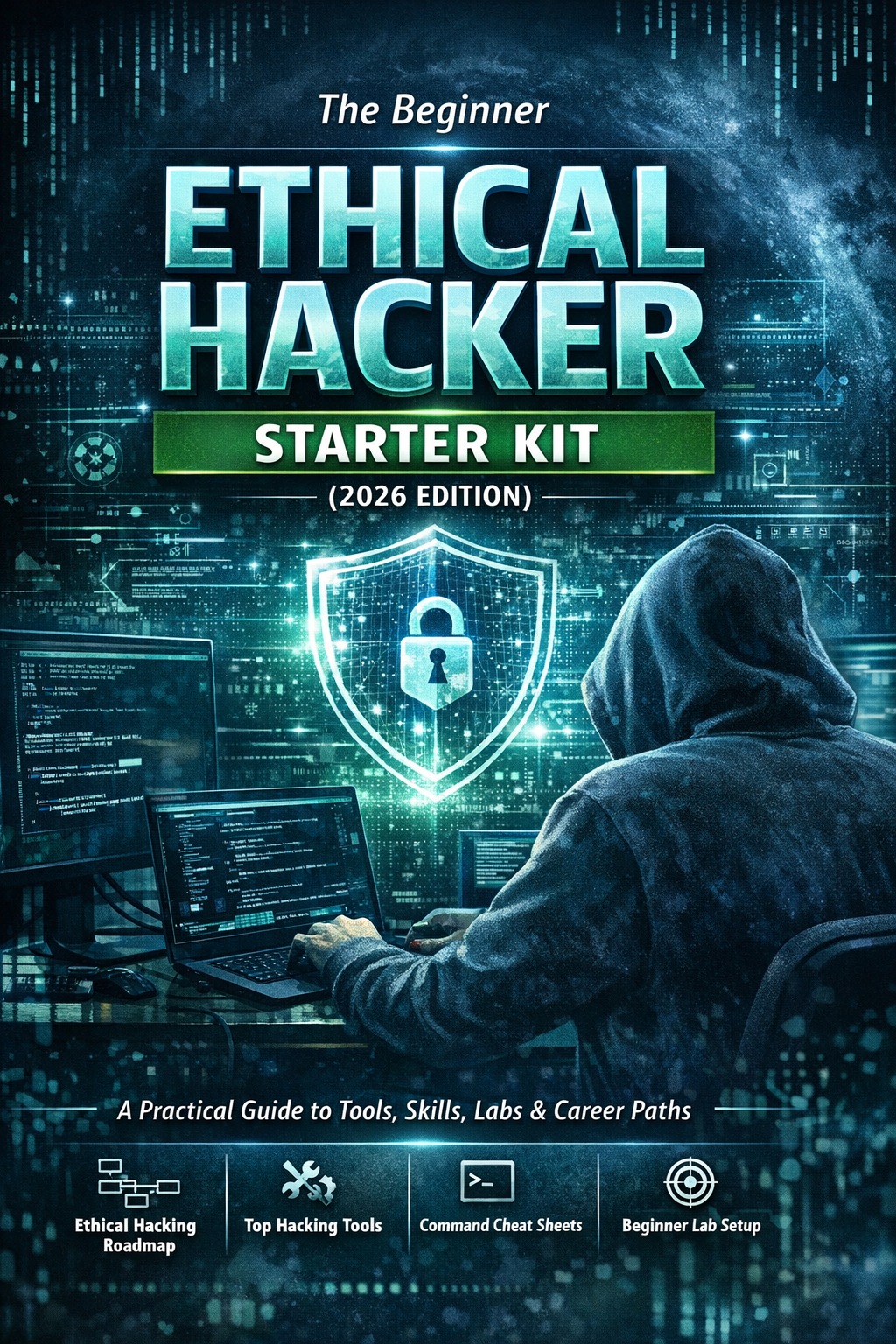
Start your journey with The Beginner Ethical Hacker Starter Kit (2026 Edition).
Inside the free guide, you’ll learn:.
- Ethical hacking fundamentals
- Beginner cybersecurity roadmap
- Essential hacking tools
- Common vulnerabilities explained
What Are Ethical Hacking Tools?
Ethical hacking tools are software applications that help security professionals evaluate the security of computer systems, networks and applications.
These tools assist with tasks such as:
- Discovering devices on a network
- Analyzing network traffic
- Testing web applications
- Auditing password security
- Collecting publicly available information
- Monitoring system activity
- Documenting findings
Security professionals use these tools to identify weaknesses before cybercriminals can exploit them.

Why Are Ethical Hacking Tools Important?
Modern computer networks are too large and complex to analyze manually. Imagine trying to inspect hundreds of servers, thousands of open ports or millions of network packets without automation.
Ethical hacking tools help professionals:
- Save time
- Improve accuracy
- Automate repetitive tasks
- Organize information
- Validate security controls
- Produce detailed reports
However, tools do not replace technical knowledge. They simply help apply that knowledge more efficiently.

Tools Don’t Make You an Ethical Hacker
One of the biggest misconceptions among beginners is believing that learning tools alone is enough. Experienced ethical hackers don’t succeed because they know hundreds of commands.
They succeed because they understand:
- Networking
- Operating systems
- Web technologies
- Programming basics
- Security principles
- Problem-solving
A tool can identify an open port but only knowledge helps you understand why it matters.
Categories of Ethical Hacking Tools
Instead of trying to learn every tool, it’s easier to understand them by category.

1. Network Scanning Tools:
These tools help identify devices connected to a network.
They can reveal:
- Active hosts
- Open ports
- Running services
- Network topology
Popular Beginner tool in this category is Nmap. Learning network scanning helps build a strong networking foundation.

2. Packet Analysis Tools:
Network traffic contains valuable information. Packet analyzers allow you to observe communication between systems. You can study:
- DNS requests
- HTTP traffic
- TCP connections
- Network protocols
Popular Beginner tool in this category is Wireshark. Understanding packets makes many cybersecurity concepts easier to grasp.

3. Web Application Testing Tools:
Most businesses rely heavily on web applications. Security professionals use specialized tools to understand how browsers communicate with websites.
These tools help analyze:
- Requests
- Responses
- Cookies
- Sessions
- Authentication
Popular Beginner Tools in this category are BurpSuite Community Edition and OWASP ZAP.

4. Enumeration Tools:
Enumeration focuses on gathering detailed information about systems and services. Professionals investigate services such as:
- DNS
- SNMP
- NetBIOS
- SMTP
- LDAP
Enumeration helps create a clearer picture of the target environment.

5. Vulnerability Assessment Tools:
These tools help identify known security weaknesses. They compare system configurations against known vulnerabilities and misconfigurations.
Remember:
Finding a potential issue is only the beginning. Human analysis is required to understand the actual risk. Most popular vulnerability assessment tools are Nessus, Nikto etc.

6. Password Security Tools:
Strong passwords are an essential part of cybersecurity. Password auditing tools help organizations evaluate password policies and demonstrate the importance of secure authentication.
Popular beginner tools in this category include:
- Hydra
- John the Ripper
- Hashcat
- Brutus
These tools reinforce concepts such as password strength, password hashing and authentication security.

7. Wireless Security Tools:
Wireless networks require their own security assessments. Wireless security tools help professionals evaluate Wi-Fi configurations and understand wireless communication. Learning wireless networking broadens your cybersecurity knowledge.
Popular tools to assess wireless security are wifite, airgeddon, wifiphisher, mdk3 and reaver etc.

8. OSINT (Open-Source Intelligence) Tools:
Not all useful information comes directly from a target system. OSINT tools help collect publicly available information from legitimate sources.
Examples include:
- Public records
- Domain information
- Search engines
- Company websites
OSINT plays an important role in many authorized security assessments. Popular OSINT tools are Maltego and Shodan etc.
Want to Learn Ethical Hacking Step-by-Step?
If you’re serious about learning cybersecurity, a structured roadmap makes the journey much easier.
Download The Beginner Ethical Hacker Starter Kit (2026 Edition) and discover:
✔ The ethical hacking learning path
✔ Beginner-friendly security concepts
✔ Essential tools ethical hackers use
✔ The most common vulnerabilities explained
Choosing the Right Tool
Beginners often ask:
“Which tool should I learn first?”
The answer depends on the skill you’re building. If you’re learning networking, start with networking tools. If you’re learning web security, focus on web testing tools. Always choose the tool that supports your learning objective rather than trying to learn everything at once.

Recommended Learning Path
A structured approach makes learning much easier.
Step 1: Networking
Start with:
- Nmap
- Wireshark
These tools help you understand how devices communicate.
Step 2: Web Security
Move on to:
- Burp Suite
- OWASP ZAP
Learn how browsers interact with web applications.
Step 3: Enumeration
Study common network services such as:
- DNS
- SNMP
- NetBIOS
- SMTP
Enumeration develops investigation skills.
Step 4: Password Security
Learn about:
- Password storage
- Authentication
- Hashing concepts
Then explore password auditing tools.
Step 5: Wireless Networking
Expand your knowledge into Wi-Fi security.
Step 6: OSINT
Develop your information-gathering and investigative skills.

Building Your First Home Lab
One of the safest ways to learn ethical hacking is by creating a home lab. A simple beginner lab may include:
- A virtualization platform
- A Linux security distribution
- A Windows virtual machine
- A vulnerable practice machine
- A small virtual network
This allows you to experiment safely without affecting production systems.

Common Beginner Mistakes
Avoid these common mistakes during your learning journey.
Installing Every Tool You Find:
More tools do not make you more skilled. Master a few tools before adding new ones.
Ignoring Networking:
Networking is the foundation of ethical hacking. Without understanding networks, many tool results won’t make sense.
Memorizing Commands:
Don’t just memorize syntax.
Understand:
- What the tool does
- Why it works
- What the results mean
Skipping Documentation:
Professional ethical hackers document every assessment.
Good reports include:
- Findings
- Evidence
- Risk descriptions
- Recommendations
Documentation is a valuable skill.
Practicing Without Authorization:
Only perform security testing on:
- Systems you own
- Home labs
- Virtual machines
- Authorized training environments
Ethical hacking always requires permission.
Tips for Learning Faster
To build your skills efficiently, follow these tips.
- Learn one tool at a time.
- Study the networking concepts behind each tool.
- Read official documentation.
- Practice regularly in a safe lab.
- Keep notes on what you learn.
- Focus on understanding rather than memorization.
- Be patient—cybersecurity is a long-term journey.

Conclusion
Ethical hacking tools are an essential part of every cybersecurity professional’s toolkit but they are only as powerful as the person using them. Instead of chasing the latest tools, focus on building a strong foundation in networking, operating systems, web technologies and security concepts. As your knowledge grows, each tool will become easier to understand and far more useful.
Remember:
- Learn concepts before tools.
- Practice in authorized environments.
- Build your skills gradually.
- Document everything you learn.
- Stay curious and keep improving.
By mastering the fundamentals and learning how different categories of ethical hacking tools fit into the security assessment process, you’ll be well on your way to becoming a confident and capable ethical hacker.
Start Your Ethical Hacking Journey Today
Learning cybersecurity can feel overwhelming at first. The best way to start is with a clear roadmap and the right resources.
Download The Beginner Ethical Hacker Starter Kit (2026 Edition) and get instant access to:
Ethical Hacking Fundamentals
A beginner cybersecurity learning roadmap
Essential hacking tools every beginner should know
Common vulnerabilities explained simply


That’s a really helpful overview, it’s definitely easy to get lost in the sheer number of options available when you’re just starting out with ethical hacking.