Bug bounty hunting is an exciting area of cybersecurity because it allows security researchers to find and responsibly report vulnerabilities in websites, applications and online services. For beginners, however, bug bounty can feel confusing.
You may hear experienced researchers discussing web vulnerabilities, reconnaissance, HTTP requests, authentication flaws, reports, scopes and responsible disclosure. At the same time, you may be unsure where to begin or how to practice without accidentally testing a system you are not authorized to assess.
The good news is that beginners can build bug bounty skills safely through structured practice.
The most important rule is simple:
Only test systems where you have clear authorization.
Before testing a real bug bounty program, beginners should develop their skills using training platforms, intentionally vulnerable applications and controlled laboratories. This guide explains how to build those skills step by step and prepare for safe bug bounty practice.
New to Ethical Hacking?
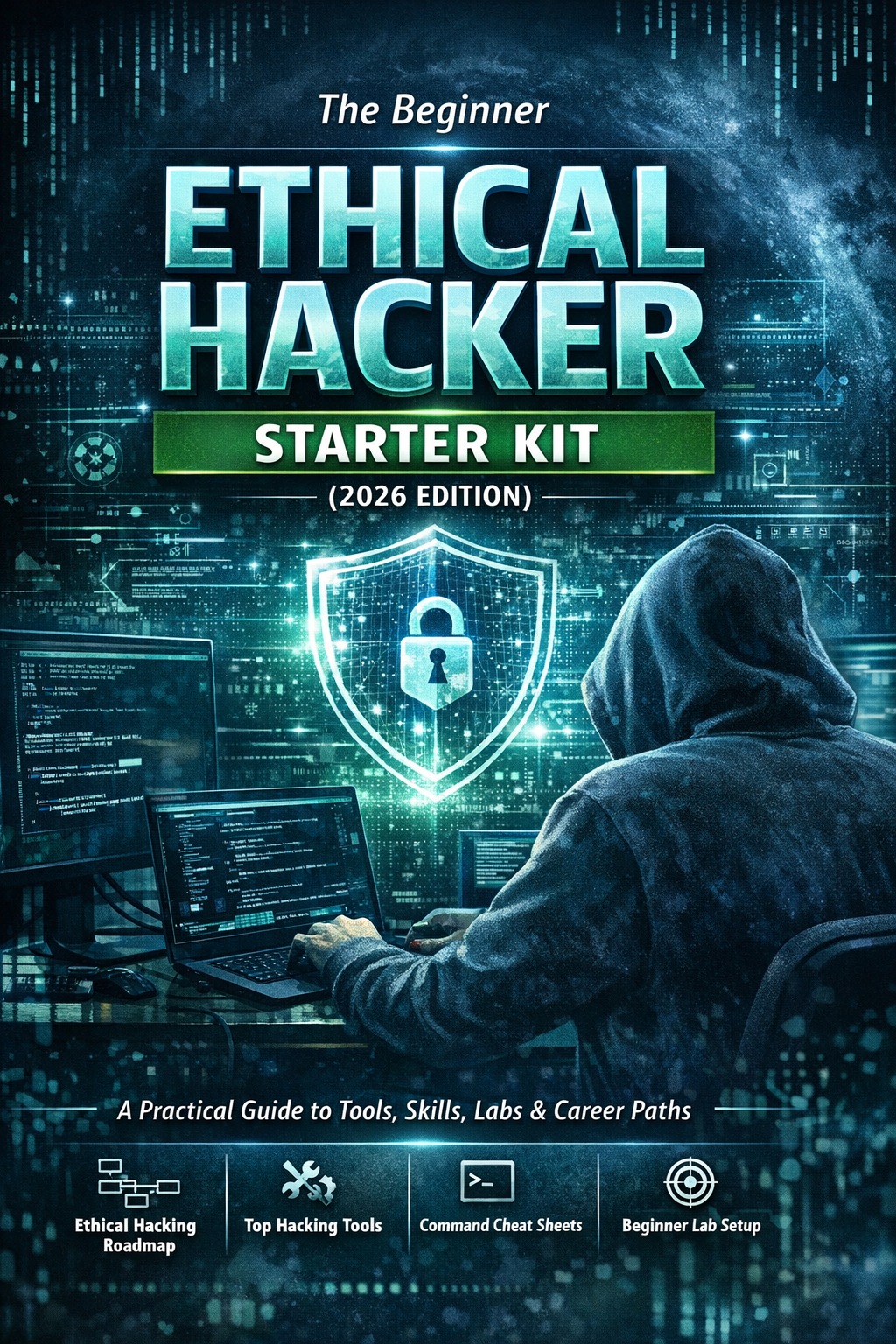
Start your journey with The Beginner Ethical Hacker Starter Kit (2026 Edition).
Inside the free guide, you’ll learn:.
- Ethical hacking fundamentals
- Beginner cybersecurity roadmap
- Essential hacking tools
- Common vulnerabilities explained

What Is a Bug Bounty Program?
A bug bounty program allows independent security researchers to identify and responsibly report security vulnerabilities within an organization’s approved scope. Organizations create rules that define what researchers are allowed to test.
A program may specify:
- Approved websites or applications
- In-scope domains
- Out-of-scope systems
- Testing restrictions
- Vulnerability categories of interest
- Reporting requirements
- Disclosure rules
Some programs may offer financial rewards for valid vulnerability reports. Others may provide recognition, reputation or other forms of acknowledgment. The important point for beginners is that a bug bounty program is not permission to test everything owned by a company.
Authorization applies only to the systems and activities permitted by the program’s rules. Always read and understand the scope before performing any testing.

Why Beginners Should Practice Before Hunting Real Bugs
Real bug bounty programs can contain large and complex applications.
A beginner may encounter:
- Multiple domains
- APIs
- Login systems
- Third-party integrations
- Cloud services
- Mobile applications
- Complex authorization systems
Jumping directly into a large target can feel overwhelming. Training environments are easier because they are intentionally designed for learning.
You can:
- Make mistakes safely
- Repeat exercises
- Study application behavior
- Practice using security tools
- Learn from guided explanations
- Develop problem-solving skills
This creates a much stronger foundation before you begin working within real bug bounty scopes.

Step 1: Learn Web Application Fundamentals
Before studying web vulnerabilities, understand how web applications work.
Start with:
- HTTP and HTTPS
- Requests and responses
- Headers
- Cookies
- Sessions
- Authentication
- Authorization
- URLs and parameters
- Forms
- APIs
These concepts are extremely important. For example, before investigating an access-control issue, you need to understand how an application identifies users and decides which resources they are allowed to access.
Before investigating input-related security problems, you should understand how applications receive and process data. A strong understanding of web fundamentals makes security testing much easier to understand.

Step 2: Learn to Use a Web Security Proxy
A web security proxy allows you to observe and analyze communication between a browser and a web application. For beginners, this can help make HTTP requests more visible.
Instead of seeing only a webpage, you can study the underlying interaction between the browser and the application.
Practice identifying:
- Request methods
- URLs
- Parameters
- Headers
- Cookies
- Response codes
- Response headers
The goal at this stage is not to attack applications. The goal is to understand normal application behavior.
Once you understand normal behavior, it becomes easier to recognize unexpected or potentially insecure behavior. Use web security proxies only against your own applications, training environments or explicitly authorized systems.

Step 3: Learn Common Web Vulnerability Concepts
Bug bounty beginners should become familiar with common categories of web security weaknesses.
Important topics include:
- Broken access control
- Authentication weaknesses
- Session management issues
- Input validation problems
- Security misconfigurations
- Information disclosure
- Business logic weaknesses
Do not try to memorize hundreds of vulnerability names immediately. Instead, understand the underlying question behind each category.
For example:
Can one user access information that should belong only to another user?
Does the application properly verify who is making a request?
Does the application safely handle user-controlled input?
Is sensitive information exposed unintentionally?
Learning to ask these questions is often more valuable than simply memorizing tool commands.

Step 4: Practice With Intentionally Vulnerable Applications
One of the safest ways to learn bug bounty skills is through deliberately vulnerable training applications. These applications are specifically created to demonstrate security weaknesses in controlled environments.
They allow beginners to:
- Observe application behavior
- Practice security concepts
- Learn HTTP interactions
- Understand authentication and authorization
- Study defensive lessons
You can also build a small practice environment using isolated virtual machines or containers. Keep vulnerable applications separated from systems that do not belong in the lab. The goal is to create an environment where experimentation does not affect real users or services.

Step 5: Use Legal Training Platforms
Hands-on cybersecurity platforms provide structured exercises and challenges that are appropriate for learning.
Look for platforms offering:
- Web security labs
- Interactive exercises
- Guided learning paths
- Capture the Flag challenges
- Vulnerable applications
- Security concepts with explanations
A productive beginner routine is:
Learn the concept → Practice in a lab → Review what happened → Study the defensive lesson → Repeat
This cycle helps you develop understanding instead of simply copying solutions. If you get stuck, research the concept before looking at a complete walkthrough. The learning process is more valuable when you spend time understanding why something happened.
Want to Learn Ethical Hacking Step-by-Step?
If you’re serious about learning cybersecurity, a structured roadmap makes the journey much easier.
Download The Beginner Ethical Hacker Starter Kit (2026 Edition) and discover:
✔ The ethical hacking learning path
✔ Beginner-friendly security concepts
✔ Essential tools ethical hackers use
✔ The most common vulnerabilities explained

Step 6: Learn Basic Application Mapping
Bug bounty testing often begins with understanding an application.
In an authorized environment, practice identifying:
- Pages
- Features
- User roles
- Authentication flows
- Forms
- API interactions
- File upload functionality
- Account settings
Think of this as learning the structure of the application. Before investigating potential security issues, you should understand what the application is supposed to do. For example, if an application has two different user roles, study how each role interacts with the system.
If an application contains an API, observe what requests are generated during normal use. The better you understand an application’s intended behavior, the easier it becomes to recognize unexpected behavior.

Step 7: Practice Authentication and Authorization Concepts
Authentication and authorization are central topics in web security.
Authentication answers:
Who are you?
Authorization answers:
What are you allowed to do?
Beginners should practice these concepts in training environments.
Study scenarios involving:
- Different user accounts
- Different roles
- Account settings
- Profile information
- Protected resources
- Session behavior
The goal is to understand whether applications consistently enforce the rules they are supposed to enforce. Always practice these scenarios using accounts and systems specifically created for authorized training.

Step 8: Learn to Take Good Notes
Successful cybersecurity learning is not only about using tools. Documentation is an important skill.
While practicing, record:
- The objective
- The environment
- The application feature being studied
- Requests and responses observed
- Expected behavior
- Actual behavior
- Lessons learned
Over time, your notes become a personal knowledge base. You may eventually notice patterns across different applications.
For example, a concept you learned while studying access control in a training application may help you understand similar security designs elsewhere.
Good notes also prepare you for writing professional vulnerability reports.

Step 9: Learn How to Write a Vulnerability Report
Finding a potential security issue is only part of bug bounty work. You must also communicate the issue clearly.
A good report typically explains:
- What the issue is
- Where it occurs
- Why it matters
- The security impact
- Clear, safe reproduction information appropriate to the authorized program
- Supporting evidence
- Recommended remediation when appropriate
Avoid exaggerating impact. A clear and accurate report is more useful than a dramatic report containing unsupported claims. For beginners, practice writing reports for vulnerabilities found in training environments. You can create fictional report templates based on lab exercises. This helps develop communication skills before submitting a report to a real organization.

Step 10: Understand Scope Before Testing
This is one of the most important bug bounty skills. Before interacting with a live bug bounty target, carefully read:
- The scope
- Program rules
- Testing restrictions
- Disclosure requirements
- Safe harbor language
- Out-of-scope assets
Never assume that every subdomain, IP address, API or application associated with an organization is automatically included. If something is unclear, do not guess. Seek clarification through the program’s official process. Professional security testing means respecting boundaries. Technical skill without authorization can create legal and ethical problems.
Step 11: Start With Beginner-Friendly Programs
When you eventually move from training environments to real bug bounty programs, look for programs with:
- Clearly defined scope
- Detailed rules
- Well-documented policies
- Beginner-friendly applications
- Clear reporting procedures
Do not feel pressured to test the largest or most popular targets. Large programs may have thousands of researchers looking at the same applications. Your first goal should be to learn how a real authorized program works. Read the rules carefully. Explore the application normally. Understand the available features. Stay within scope. And document your observations carefully.

Common Mistakes Beginner Bug Bounty Hunters Make
Jumping Straight Into Automated Tools
Automation can be useful but tools do not replace understanding. Beginners should first learn how applications work.

Ignoring the Scope
Testing outside the approved scope is one of the most serious mistakes a researcher can make. Always verify authorization.
Copying Commands Without Understanding Them
Copying commands or techniques from videos without understanding them can lead to mistakes. Focus on learning the concept behind a technique.
Testing Real Websites for Practice
A publicly accessible website is not automatically a legal practice target. Use labs and authorized programs.
Expecting Quick Rewards
Bug bounty hunting can require patience. Many skilled researchers spend significant time learning, researching and investigating before finding valid vulnerabilities. Treat bug bounty primarily as a learning journey when you are starting.

A Simple Beginner Bug Bounty Learning Path
A structured learning path can make the process easier.
Stage 1: Web Fundamentals
Learn HTTP, cookies, sessions, authentication, APIs and basic web development concepts.
Stage 2: Web Security
Study common vulnerability categories and defensive principles.
Stage 3: Hands-On Labs
Practice using intentionally vulnerable applications and legal training platforms.
Stage 4: Application Mapping
Learn to understand application features, user flows and functionality.
Stage 5: Documentation
Practice recording observations and writing clear reports.
Stage 6: Authorized Programs
When ready, participate only in programs with clear authorization and defined scope.

Conclusion
Bug bounty hunting can be a rewarding way to develop web security knowledge but beginners should not rush directly into testing real applications.
Start with the fundamentals.
Understand how web applications communicate.
Learn how authentication and authorization work.
Practice inside deliberately vulnerable environments.
Develop your ability to observe application behavior.
Learn how to document findings.
And always respect authorization boundaries.
The strongest bug bounty researchers are not simply people who know the most tools.
They understand systems, ask good questions, investigate carefully and communicate findings clearly.
Most importantly, they practice responsibly.
Build your skills step by step in safe environments and when you are ready to participate in a real program, make scope and authorization your first priority.
Bug bounty is not about testing everything you can reach.
It is about helping organizations improve security within clearly defined and authorized boundaries.
Start Your Ethical Hacking Journey Today
Learning cybersecurity can feel overwhelming at first. The best way to start is with a clear roadmap and the right resources.
Download The Beginner Ethical Hacker Starter Kit (2026 Edition) and get instant access to:
Ethical Hacking Fundamentals
A beginner cybersecurity learning roadmap
Essential hacking tools every beginner should know
Common vulnerabilities explained simply